Per-Ingvar Brånemark Never Wanted to Be a Dentist
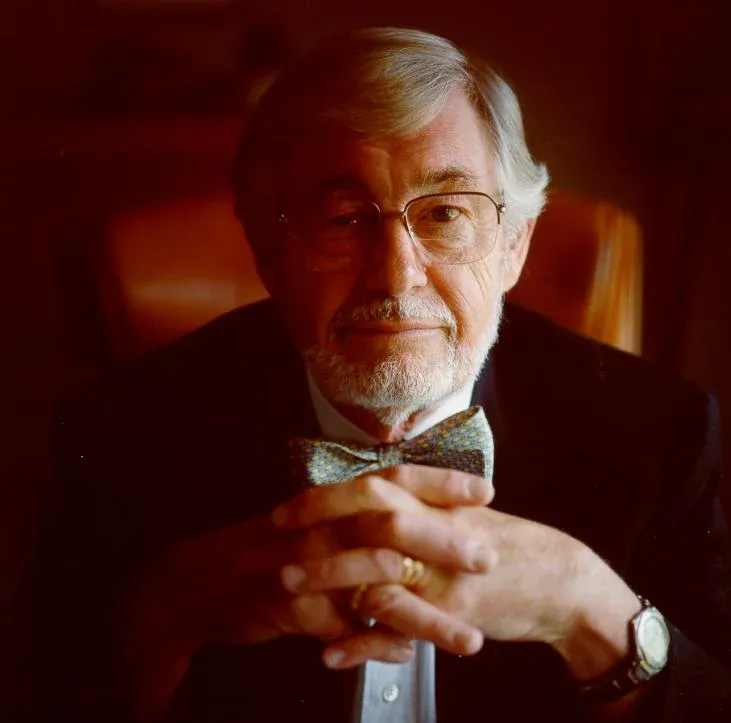
In brief — Per-Ingvar Brånemark was an orthopedic surgeon, not a dentist. In 1952 he was studying microcirculation in rabbit bones using titanium optical chambers. When he tried to remove one, he found it wouldn’t come off. That moment was the beginning of osseointegration. It took thirty years before the world listened.
He was a physician who studied blood inside bones.
He had no interest in teeth. No secret plan to revolutionise dentistry. He had a rabbit, a microscope, and a question: how does blood circulate in living bone?
The answer changed everything.
Lund, 1952
Per-Ingvar Brånemark was born on 3 May 1929 in Karlshamn, Sweden. He studied medicine at the University of Lund, specialising in anatomy and orthopaedics. His interest was microcirculation — the flow of blood through the smallest vessels, those that nourish bone from within.
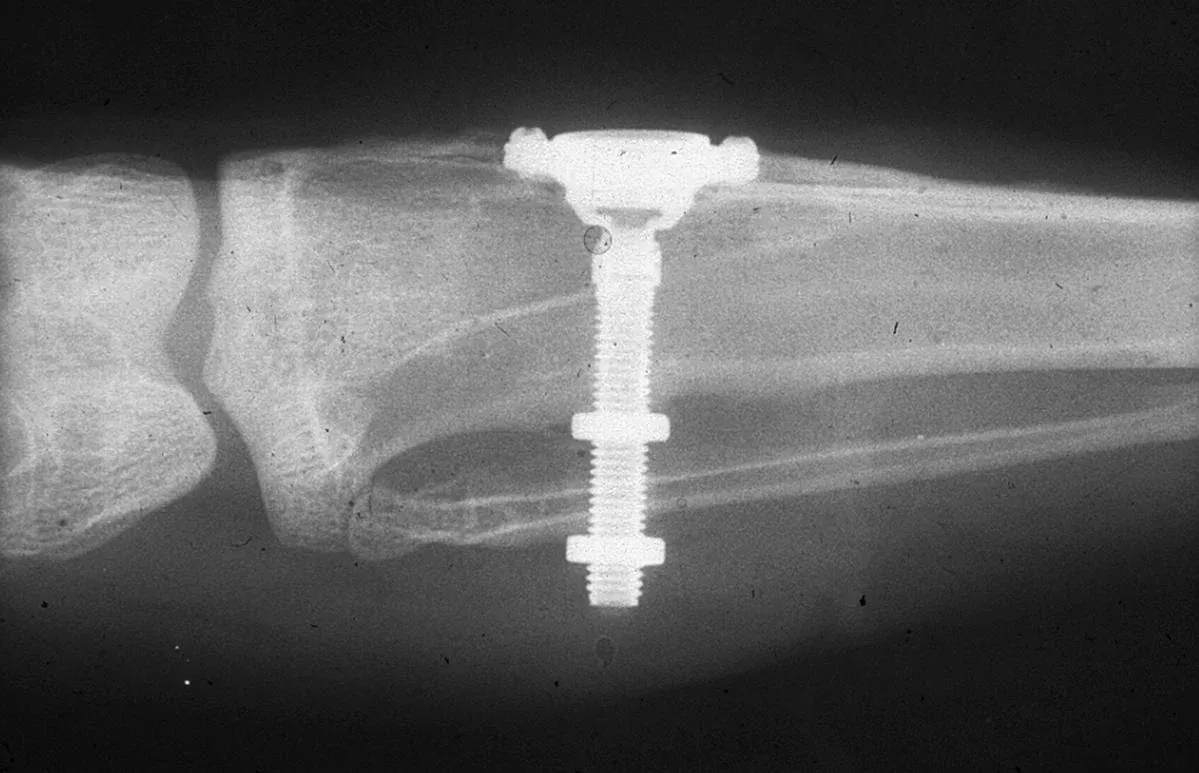
To observe it directly, he needed a window into living bone. He designed an optical chamber: a small cylinder with lenses, screwed into a rabbit’s fibula. Made of titanium, because titanium is inert, lightweight, easy to work with.
The experiment worked. Brånemark observed bone microcirculation for months, in real time. Then came the moment to remove the chamber.
It wouldn’t come off.
He twisted it, forced it, studied it. The titanium had fused with the bone. There was no joint, no gap. There was continuity. The bone had colonised the metal surface as though it had always been there.
Brånemark stood staring at that rabbit.
A new word for an ancient phenomenon
Brånemark called it osseointegration: direct, structural and functional contact between living bone and the surface of a load-bearing implant.
It was not a discovery anyone had sought. It was the answer to a question nobody had asked. And like all unsought discoveries, it met fierce resistance.
The academic world of the time did not want to hear it. Maxillofacial surgeons and dentists were accustomed to working with subperiosteal implants — metal frameworks placed on bone rather than inside it. The idea that a metal object could integrate into living bone, withstand masticatory loads, and last for decades sounded like science fiction.
Brånemark carried on.
Gösta Larsson
- Gothenburg, the University.
Gösta Larsson was thirty-four. He had been born with a congenital jaw malformation: insufficient bone, no teeth, difficult speech. He had lived that way his entire life.
Brånemark proposed something that had never been done on a human being.
Four titanium screws in the mandible. Not on the bone. Inside it.
Larsson accepted.
The surgery succeeded. Within weeks the titanium integrated. Brånemark mounted a prosthesis. Larsson spoke better. He chewed. He resumed a normal life.
He wore that same prosthesis for forty years.
He died in 2005. The implants placed in 1965 were still in place.
Thirty years in the wilderness
But the world was not watching.
For nearly two decades Brånemark worked in isolation. He published. He collected data. He followed patients year after year. His team in Gothenburg amassed a body of cases without precedent in the history of implantology.
The international scientific community did not respond. Or worse: it responded with institutional scepticism. Endosseous implants were considered biologically impracticable. The body would reject the metal. It would not last. It would not work.
Brånemark did not stop.
In 1977 he published the work of a lifetime: Osseointegrated implants in the treatment of the edentulous jaw. Experience from a 10-year period. Data on over a hundred patients, followed for ten years, with success rates nobody had ever seen before.
No fireworks. No standing ovation.
Toronto, 1982
George Zarb was a Canadian prosthodontist at the University of Toronto. He was sceptical. He had heard of Brånemark’s work and did not believe it.
He decided to see for himself.
He organised a conference. He invited Brånemark to present his case series before the international scientific community. The plan was simple: expose the work to systematic scrutiny. If it held up, fine. If it didn’t, that would be the end of it.
Brånemark brought data on seven hundred patients. A minimum of five years’ follow-up. Radiographs, records, photographs. Zarb studied them. The researchers present studied them.
They held up.
Zarb became the most ardent advocate of osseointegration. The 1982 Toronto Conference was the moment the world stopped resisting. From there, modern implant dentistry took shape in a matter of years.
The legacy
Brånemark died on 20 December 2014 in Gothenburg. He was eighty-five.
In the half-century between the rabbit in Lund and the end of his life, osseointegration had become the biological foundation of all implant dentistry. Every year, between eight and ten million dental implants are placed worldwide. All of them rest on what he saw in 1952, trying to unscrew an optical chamber from a rabbit’s femur.
He never wanted to be a dentist. He wanted to understand how bone lives.
He understood it so well that he changed the lives of millions.
FAQ
Who was Per-Ingvar Brånemark?
How was osseointegration discovered?
Who was the first patient to receive an osseointegrated implant?
When was osseointegration accepted by the scientific community?
What is the importance of osseointegration today?
Go deeper
Espansione crestale (split crest) →Allargare la cresta senza trapianto — tecnica ERE e bonebending
Need a professional opinion?
Book an appointment at Dr. Bruschi's practice in Frosinone. First visit includes full diagnosis and personalised treatment plan.
Stai valutando un impianto dentale?
Ho scritto una guida in 8 capitoli che spiega tutto quello che un paziente dovrebbe sapere prima di sedersi in poltrona. Niente marketing — solo fatti, casi studio e una checklist per fare le domande giuste.
Scarica la guidaStay Updated
New articles on periodontology, implantology and oral surgery — delivered to your inbox.
Comments
Loading comments...
Leave a comment