In brief — In 1910 Charles Mayo hypothesised that hidden dental infections caused systemic diseases. The idea led to the extraction of millions of healthy teeth. Weston Price seemed to confirm it with rabbit experiments, but his studies lacked controls and were debunked by the 1930s. Today the science is clear: properly performed root canal therapy does not cause disease. The problem is the infection that remains when treatment is done badly. The solution is not extraction — it is good endodontics.
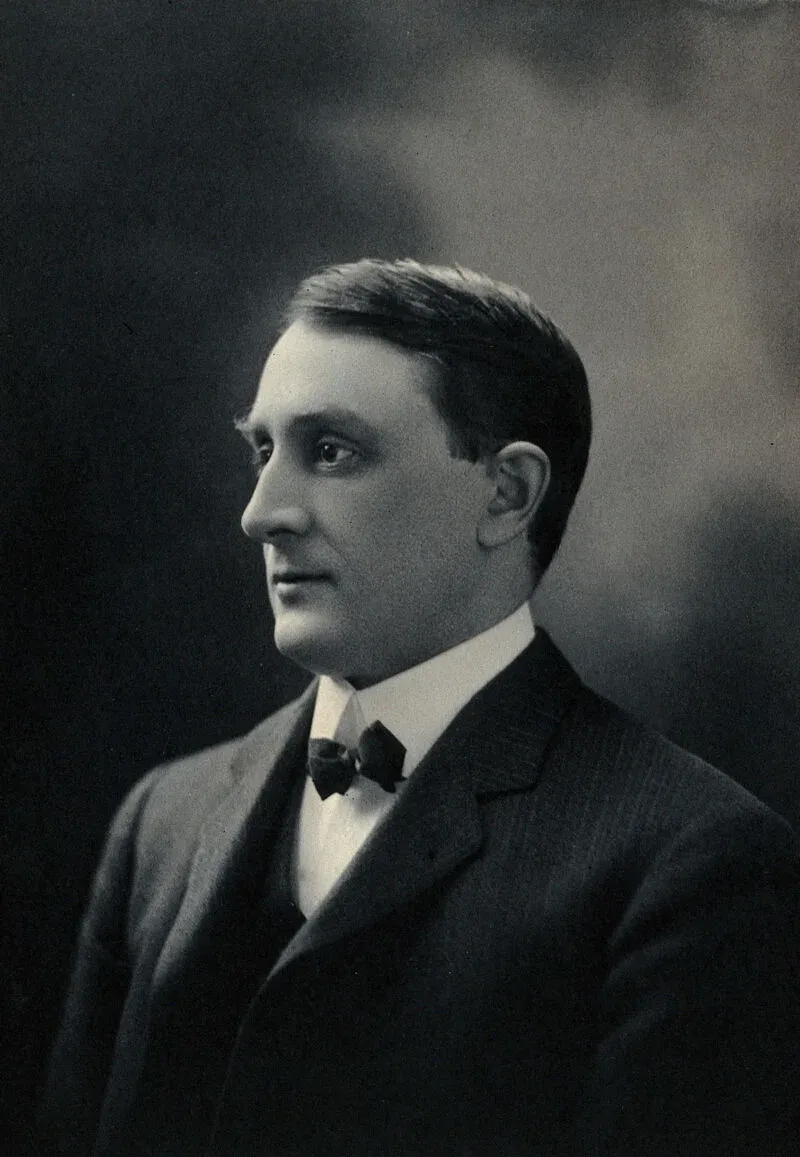
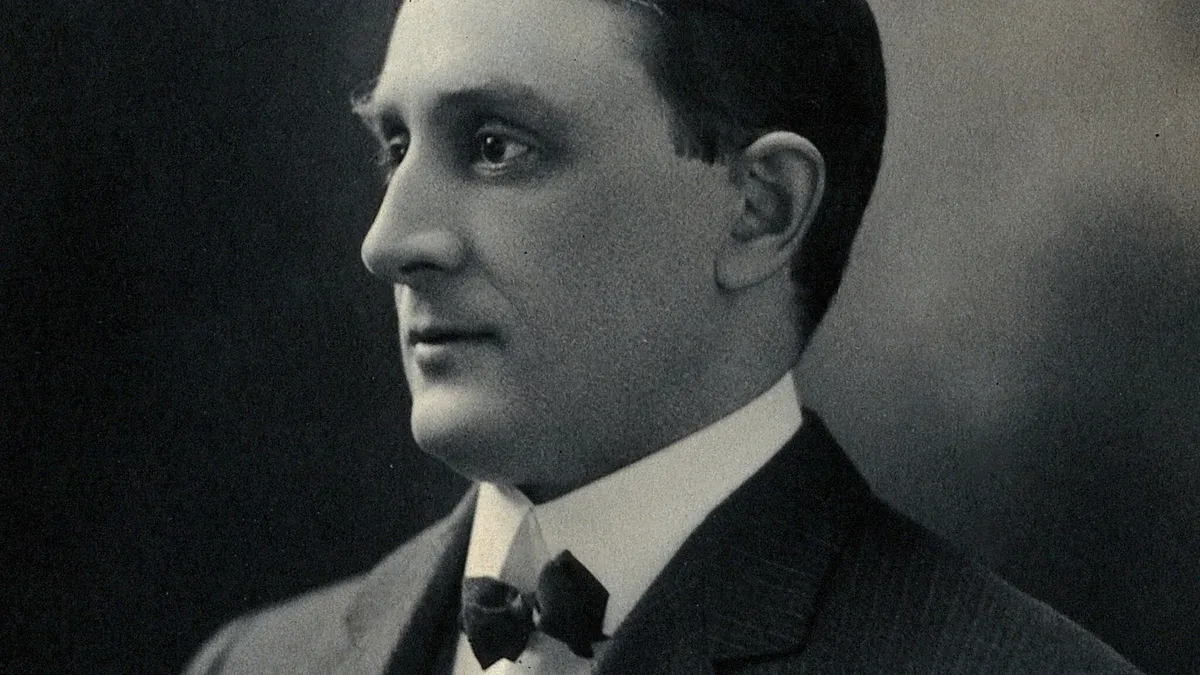
Cleveland, 1910. An elegant physician — the kind who speaks softly and cites often — takes the stage at the internal medicine section of the American Medical Association and says something that will change millions of lives. His name is Charles Mayo. The founder of the clinic that bears his name. He says, more or less, that many of the diseases we cannot cure — arthritis, nephritis, certain heart disorders, some nervous breakdowns — might originate from foci of hidden infection in the body. The tonsils. The appendix. And, above all, the teeth.
The audience applauds.
After all, I myself say the same, alongside many esteemed colleagues. But the perspective is different. With today’s knowledge and instruments it is possible to treat those teeth and resort to extraction only in extreme cases.
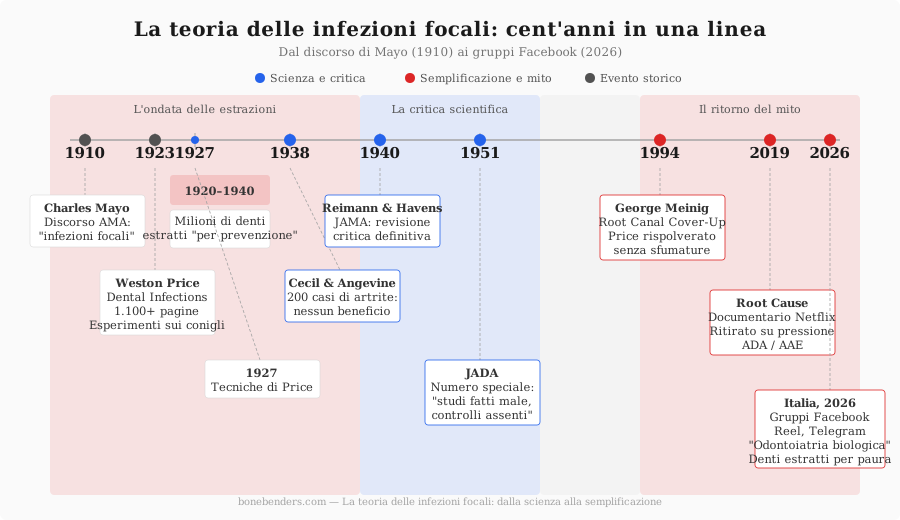
A few years later, a Canadian dentist named Weston Price picks up the idea and gives it legs. He extracts root-canal-treated teeth from sick patients, crushes the fragments, injects them under the skin of rabbits. The rabbits fall ill. In 1923 he publishes the results in two volumes: Dental Infections, Oral and Systemic and Dental Infections and the Degenerative Diseases. Over a thousand pages of experimental evidence.
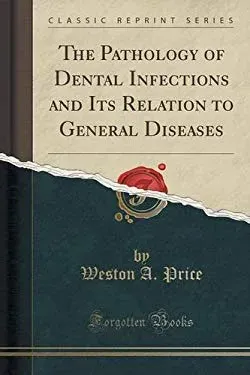
This is the birth certificate of focal infection theory. And, unfortunately, the beginning of one of the greatest iatrogenic massacres of the twentieth century. Not because of Price — who, as we shall see, was more cautious than those who would later cite him — but because of those who turned a clinical observation into a universal verdict.
The great wave of extractions
Between 1920 and 1940, millions of healthy teeth were removed. Not for caries, not for infections, not for pain. For prevention. Because an internist had asked the dentist to extract “all root-canal-treated teeth, and the suspicious ones too,” hoping that the patient’s rheumatoid arthritis would improve. Or the depression. Or the ulcer. Or the multiple sclerosis. Entire quadrants were “sanitised” — meaning every tooth was extracted.
Many children lost their first permanent molars prematurely because the paediatrician feared future endocarditis. Full-mouth prophylactic extractions were performed on thirty-five-year-olds.
It did not work. The diseases did not heal. Complete dentures, in an era without implant dentistry, condemned millions to a masticatorily mutilated old age.
Meanwhile, someone began looking more closely at Price’s rabbits.
By 1927 his bacteriological techniques were already under scrutiny. In the 1930s, Cecil and Angevine published a study of 200 cases of rheumatoid arthritis and found no consistent benefit from tonsillectomy or tooth extraction. Cecil, who had been one of the theory’s supporters, changed his mind and wrote a sentence that should hang in every medical school lecture hall: focal infection is a splendid example of a plausible medical theory that risks, through its enthusiastic supporters, being converted into the status of accepted fact.
In 1940, Reimann and Havens published the definitive critical review in the Journal of the American Medical Association. In 1951, the Journal of the American Dental Association devoted an entire issue to the question. Verdict: badly designed studies, absent controls, massive inocula representing nothing physiological, specimen contamination during extraction. The theory was dead.
Or so it seemed.
The real message of Weston Price
Price’s claims have been distorted and oversimplified, as often happens when a complex idea meets an audience seeking simple answers.
Price wrote: “Do not rush to conclude that all root-canal-treated teeth must be extracted.”
He repeatedly stated that the decision to keep or extract an endodontically treated tooth should depend on the patient’s immune system efficiency and family history. He discovered, for example, that 25% of patients with no history of degenerative diseases and an excellent immune response developed no systemic pathology regardless of dental conditions.
But the key point is another. And it changes everything.
In Price’s day — and well past the mid-twentieth century — endodontic treatments were primitive. Without rubber dam, without rotary nickel-titanium instruments, without microscopes, without cone beam CT. Files were rigid, irrigation inadequate, root canal fillings approximate. The major systematic review by Ng et al., analysing 63 studies from 1922 to 2002, estimates success rates between 68% and 85% with strict radiographic criteria1 — and notably, those rates had not improved in five decades. Before the 1960s, the percentage was certainly much lower. In practice, the majority of “root-canal-treated” teeth of Price’s era really were bacterial cultures. Price was not wrong in describing what he saw. Those who proposed extraction as the only solution were wrong.
Today the landscape is different. With rotary nickel-titanium instruments, operating microscopes, CBCT, bioceramic materials and modern irrigation protocols, endodontic success rates exceed 90% (and in expert hands approach 95%). The percentage of treated teeth still harbouring bacteria has dropped dramatically. Those teeth — few — certainly need retreatment or extraction. All the others pose no health risk whatsoever.
The return
In 1994, a Californian dentist, George Meinig — one of the founders of the American Association of Endodontists — published a book with a title perfect for a thriller: Root Canal Cover-Up. The cover-up, the conspiracy. The great concealment. Meinig dusted off Price, relaunched his theses and packaged them for a general audience.
But who was Meinig really, and what did he actually say?
Born in Chicago, an army captain during the Second World War, then a Hollywood dentist for the stars who ran the Twentieth Century Fox dental office. He was one of the 19 founders of the American Association of Endodontists (AAE). Fellow of the American College of Dentists and the International College of Applied Nutrition. For 17 years he wrote a weekly nutrition column for the Ojai Valley News. In May 1993, at the AAE’s fiftieth anniversary, he was honoured as one of only four surviving founders.
Meinig came into possession of Weston Price’s original research volumes and declared himself “terribly disturbed and shaken” — he said he was “astonished” that in 47 years of practice no one had ever shown them to him. In June 1993, 47 years after the AAE’s founding, he published Root Canal Cover-Up.
Meinig’s central thesis is that root canal therapy leaves a “dead infected organ” in the body. The “three complete miles” of dentinal tubules in each tooth cannot be reached by instruments nor sterilised by any protocol. Filling materials like gutta-percha shrink and create micro-leakage, sealing in toxic metabolic waste. Bacteria trapped in tubules can percolate and reach other organs, glands or tissues, triggering new infections — effectively reviving Price’s old focal infection theory.
However, Meinig himself inserted this caveat at the book’s opening: the degenerative diseases observed in Price’s studies “…commonly arise from infections other than those around teeth, and are also commonly due to nutritional deficiencies and/or excesses and the wide range of biomechanical individuality that exists…” In practice, he admitted that the pathologies he attributed to root canals commonly had other causes — nutritional, infectious, individual.
Meinig based everything on Price’s 1920s research: extracting treated teeth from sick patients and implanting them under the skin of rabbits, observing that the rabbits fell ill. But those experiments lacked control groups, used excessive bacterial doses, and contamination during extraction was inevitable. By the 1930s, better-designed studies found no link between endodontically treated teeth and systemic diseases. The same AAE that Meinig helped found now states that endodontic therapy has a success rate of 90-95%, and the ADA’s Division of Scientific Affairs confirms that “endodontic treatment performed by qualified practitioners does not cause systemic disease.”
Meinig is presented by “biological dentists” as a courageous apostate. But his own words betray him: the disclaimer admits multifactoriality, the book contains no original research but only a popular retelling of Price, and the conversion occurred not through new clinical evidence but through the late reading of studies already 70 years old.
The Netflix documentary
“Root Cause” is a 2019 documentary, directed by Frazer Bailey, that had a brief life on Netflix. The thesis is simple and ancient: root-canal-treated teeth are supposedly the hidden cause of heart disease, cancer, chronic fatigue. Bailey tells his own story — years of malaise, the search for answers — and finds it in a root canal performed years earlier. The documentary mixes personal narrative and interviews with figures like Weston Price and his intellectual heirs, building a story with the emotional structure of a revelation. The problem is that the revelation rests on nothing truly solid.
Certainly, Bailey’s personal illness may well have been related to the dental treatment. However, a bad treatment cannot invalidate all good ones. Claiming that all endodontic treatments are dangerous because the tooth is “dead” is incorrect and imprecise. On the contrary, it must be restated that endodontic treatments need to be re-checked and monitored over time, like any therapy. And further intervention — including extraction — will be necessary whenever clinical or radiographic signs of residual infection appear.
The scientific community responded with unusual firmness. The American Association of Endodontists, the American Dental Association and the American Association for Dental Research published joint statements calling for the film’s removal.
I will give my own opinion. It was a wrong, corporatist move. Freedom of expression must never be questioned. Even if someone holds different — and very probably incorrect — ideas, they must be free to express them.
I watched the documentary. I consider it well made, cinematically. I believe the director’s personal story may genuinely have been influenced by a badly treated tooth. However, I must state firmly that you cannot tar everything with the same brush. A careful and honest endodontist would have treated the director’s tooth properly. If it had been monitored over time by the right practitioners, the dental problem would certainly have been resolved. And with it, all its consequences.
The wrong message
In Italy the message arrives distorted, poorly translated, mixed with images of extracted teeth photographed on kitchen tables, with English captions that seem exotic.
It gets shared in groups and channels gathering many patients, and within those groups sentences circulate that would startle anyone who has studied even basic immunology. Titanium as a hapten that short-circuits the meridian. ASIA syndrome (Shoenfeld’s) applied to any implant except zirconia ones. The latter, which can be excellent but pose other issues, are of course presented by our “heroes” as the only possible solution.
The root-canal-treated tooth as a source of toxins, regardless of any real clinical and radiographic assessment, is one of the central nodes of these interpretive frameworks.
I have the utmost respect for anyone’s opinions. What I do not tolerate very much is when someone exploits patients’ fears.
These are people who are genuinely ill, who have spent years searching for a cause for their symptoms, and who have finally found a cause-and-effect explanation: the culprit is that tooth. That implant. That metal filling. And the cure is as simple as extracting the tooth or removing the implant. Except that the symptom never goes away, or returns shortly after.
The truth is that patients’ symptoms are always traceable to objective findings — infections from faulty root canals or malpositioned implants with peri-implantitis. Invoking fanciful theories to explain ailments easily identifiable and treatable with evidence-based medicine does harm, first and foremost to the patients themselves.
What the data actually say
Here comes the part that documentaries never show, because it requires patience. It requires holding two sentences together that seem contradictory, and understanding that they are not.
First sentence. Properly performed root canal therapy does not cause systemic disease. This has been measured. The largest prospective study ever conducted on the topic — the ARIC, Atherosclerosis Risk in Communities, published in the Journal of Public Health Dentistry — followed 6,638 individuals for nearly sixteen years, recording coronary events, strokes, heart failure, venous thromboses. Result: no association between having undergone endodontic treatment and increased cardiovascular risk. None.2
Second sentence. Untreated apical periodontitis — the infection that harbours around the apex of a badly treated or untreated tooth — shows some signal of association with cardiovascular disease and systemic inflammation. This is what the Finnish Corogene study published in the Journal of Dental Research3, the Swedish PAROKRANK study published in the Journal of Endodontics4, and several more recent systematic reviews tell us.
The two sentences, taken together, completely overturn the “toxic teeth” narrative. Because they say one thing only: the problem is not root canal treatment. The problem is the infection that remains when treatment is not done, or is done badly. The solution, therefore, is not extraction. The solution is treating well. Performing proper root canals — with rubber dam, with microscopes, with the right needles, the right sealers, at the right pace. And, when needed, retreating.
There is an abyssal difference between “the root-canal-treated tooth poisons the body” and “chronic apical infection is an inflammatory focus worth treating.” The first is superstition dressed as science. The second is good endodontics from 1940 onwards. The “biological” dentists mix the two and sell the confusion as revelation.
The hardest thing to tell a patient
Occasionally patients arrive at my practice carrying a printed list of articles from Facebook groups. Some ask to have perfectly asymptomatic root-canal-treated teeth extracted — radiographically sound, twenty years after treatment. Some have already found someone who did it.
The point is that a root-canal-treated tooth is not a dead tooth. This is perhaps the heaviest lie in the entire biological narrative, and also the easiest to dismantle. An endodontically treated tooth has lost its pulp, yes. But it still has its periodontal ligament, vascularised, innervated. It still has its surrounding bone, constantly remodelling. It still has its root cementum, alive. It participates in proprioception, mastication, occlusal stability. A tooth without pulp is not a corpse. It is a tooth that has lost an internal organ — the pulp parenchyma — but continues to live attached to the body. Exactly as a person who has had their appendix removed is not a walking corpse.
Calling it dead is a rhetorical trick. It triggers, in the listener, the ancient and powerful association dead = putrefaction = poison. It is the same mechanism that a century ago — oversimplifying Price well beyond his intentions — convinced thousands of doctors to have millions of treatable teeth extracted.
A century later
The most surprising thing, if you look closely, is that almost nothing has changed. The arguments are the same as in 1920. The metaphors are the same. Even the images — extracted teeth, lined up, photographed with blackened roots, arrows pointing to the black bacterial infection — seem taken from a Price volume, just slightly sharper.
What changed is the medium. No longer medical conferences, but Facebook groups. No longer thousand-page books, but one-minute reels. Speed has increased; verification has collapsed. And the result is that in Italy, in 2026, there are people having healthy teeth extracted because they saw a video.
A serious dentist today must do something they were never taught at university. Every now and then, they must sit across from a frightened patient and tell the story of Weston Price. Tell them about Cecil, Reimann, Grossman. Tell them that in 1951 the JADA published an entire issue to declare the theory wrong. Tell them about the 6,638 Americans in the ARIC study. Tell them that apical periodontitis must be treated, not fed by the fear of treating it. Tell them that the link between the mouth and general health is real — but must be read with the right tools.
And then, at the end, they must also say the hardest thing. That if the patient has symptoms no one can explain — the dizziness, the palpitations, the anxiety, the diffuse pain — those symptoms are real. They deserve a doctor who will listen. Perhaps many doctors. But they do not deserve to be explained away by a tooth.
Because the tooth has nothing to do with it. And every time we tell a patient it does, we are stealing their time. Time they could spend looking for the real cause.
Essential references
Footnotes
-
Ng YL, Mann V, Rahbaran S, Lewsey J, Gulabivala K. Outcome of primary root canal treatment: systematic review of the literature — Part 2. Influence of clinical factors. Int Endod J. 2008;41(1):6–31. doi:10.1111/j.1365-2591.2007.01323.x. PubMed ↩
-
Cowan LT, Lakshminarayan K, Lutsey PL, Beck JD, Offenbacher S, Pankow JS. Endodontic therapy and incident cardiovascular disease: The Atherosclerosis Risk in Communities (ARIC) study. J Public Health Dent. 2020;80(1):79–91. doi:10.1111/jphd.12353. PubMed ↩
-
Liljestrand JM, Mäntylä P, Paju S, Buhlin K, Kopra KAE, Persson GR, Hernandez M, Nieminen MS, Sinisalo J, Tjäderhane L, Pussinen PJ. Association of Endodontic Lesions with Coronary Artery Disease. J Dent Res. 2016;95(12):1358–1365. doi:10.1177/0022034516660509. PubMed ↩
-
Sebring D, Buhlin K, Lund H, Norhammar A, Rydén L, Kvist T. Endodontic Inflammatory Disease and Future Cardiovascular Events and Mortality: A Report from the PAROKRANK Study. J Endod. 2024;50(8):1073–1081. doi:10.1016/j.joen.2024.05.003. PubMed ↩
FAQ
Is a root canal tooth dead?
Can a root canal tooth cause heart disease or cancer?
Has Weston Price's focal infection theory been confirmed?
When is a root canal tooth actually a problem?
Does the Netflix documentary Root Cause tell the truth?
References
- https://doi.org/10.1111/jphd.12353
- https://doi.org/10.1177/0022034516660509
- https://doi.org/10.1016/j.joen.2024.05.003
- https://doi.org/10.1007/s00784-020-03596-8
- https://doi.org/10.1111/j.1365-2591.2007.01323.x
- https://doi.org/10.1001/jama.1940.02810090008003
- https://doi.org/10.1016/j.autrev.2010.07.003
- https://pubmed.ncbi.nlm.nih.gov/31965569/
- https://pubmed.ncbi.nlm.nih.gov/27466397/
- https://pubmed.ncbi.nlm.nih.gov/38763484/
- https://pubmed.ncbi.nlm.nih.gov/32964348/
- https://pubmed.ncbi.nlm.nih.gov/17931388/
Go deeper
Espansione crestale (split crest) →Allargare la cresta senza trapianto — tecnica ERE e bonebending
Need a professional opinion?
Book an appointment at Dr. Bruschi's practice in Frosinone. First visit includes full diagnosis and personalised treatment plan.
Stay Updated
New articles on periodontology, implantology and oral surgery — delivered to your inbox.
Comments
Loading comments...
Leave a comment