The Hidden Power of the PDL for Extraordinary Bone Regeneration
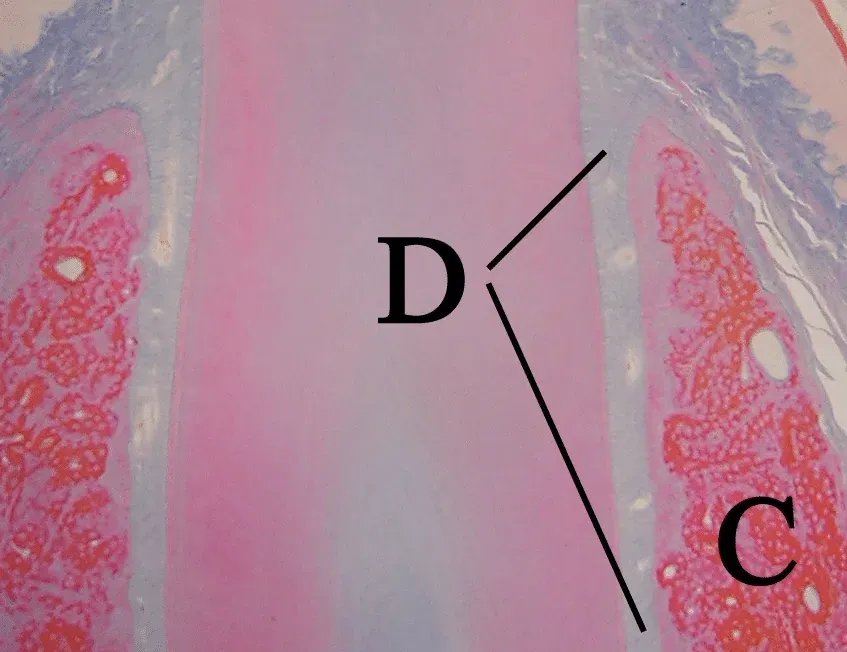
In brief — Periodontal ligament (PDL) stem cells carry an extraordinary osteogenic potential that enables bone regeneration even when they come from diseased tissue. Preserving the PDL during extractions and creating the right osteogenic conditions is an evidence-based strategy: it improves post-extraction implant outcomes and reduces the need for heterologous grafts.
In modern dentistry, one scientific finding is quietly changing how we approach bone regeneration around dental implants: the osteogenic potential of cells derived from the periodontal ligament (PDL) and from granulation tissue.
The Science Behind Regeneration
Human periodontal ligament stem cells (hPDLSCs) are not just any cells. First isolated in 2004, they carry the typical features of mesenchymal stem cells but with an ace up their sleeve: they can differentiate into cementoblasts, fibroblasts and osteoblasts — that is, rebuild all three components of the periodontal complex. The 2025 review by Liu and colleagues in Bioactive Materials captures this shift precisely, describing the move from simple guided repair to “developmental engineering” that mimics embryonic events. Even more striking are the high-osteogenic-potential cells (HP-PDLSCs), which have shown remarkable capacity in bone remodeling.
It isn’t a phenomenon limited to the ligament. A 2023 scoping review in Cells (Alarcón-Apablaza and colleagues) compared the different oral-cavity stem cell sources — pulp, ligament, periosteum, bone — and confirmed that PDL cells reliably form bone in small- and medium-size defects. With an honest caveat: on their own they are not enough. You almost always need a scaffold to hold them in place and guide their organization.
An Unexpected Potential
One of the most surprising findings concerns the cells of periodontal granulation tissue. Even when they come from diseased tissue, once treated properly these cells can contribute significantly to bone regeneration. Which means that even compromised periodontal tissues retain valuable regenerative potential.
Game-Changing Clinical Implications
For the Oral Surgeon
These findings have immediate practical implications:
Tissue Preservation: During extractions, it is essential to preserve the periodontal ligament and granulation tissue to harness their natural regenerative capacity.
Preliminary Periodontal Treatment: Even for teeth deemed “hopeless,” periodontal treatment improves the regenerative capacity of the surrounding tissues and pays off in future surgery. It is one reason why pulling a tooth to place an implant right away isn’t always the smart choice: that ligament, that tissue, is worth more than it looks.
Osteogenic Environment: Using osteogenic media and conditions during treatment can meaningfully boost the regenerative potential of PDL cells.
For the Patient
These advances translate into:
- Better outcomes for post-extraction implants
- More effective healing of bone defects
- More conservative treatment strategies that make use of the patient’s own tissues
And here we stop talking about the lab alone. The meta-analysis by Sun and colleagues (2023, BMC Oral Health), which pooled five randomized clinical trials for a total of 118 patients, showed that cell therapy improves periodontal parameters compared with cell-free techniques: roughly 1.2 mm more clinical attachment gained and an average pocket reduction of 0.75 mm. Not spectacular numbers, but real ones, measured on real patients. On the implant side, the most recent proof comes from a randomized trial by Sanz and colleagues (2025, Clinical Oral Implants Research): in 48 patients, autologous mesenchymal cells seeded on a synthetic scaffold enabled three-dimensional bone reconstruction before implant placement, with volume gains greater than the autogenous bone block and full osseointegration in every case. Biology, in short, has started to keep its promises — the same logic that drives expansion that regenerates the way nature does.
The Future of Implant Dentistry
Combining PDL cells with appropriate scaffolds is a powerful strategy to improve bone regeneration, particularly useful in critical-size defects. One detail worth remembering: traditional guided tissue regeneration (GTR) already aims to activate PDLSCs, but — as Liu’s 2025 review points out — clinical results remain inconsistent. That is exactly why you cannot just “place a membrane and wait”: you have to give those cells the right environment. It is the philosophy that sets bonebending apart from traditional alveolar bone regeneration.
Takeaways for Clinical Practice
The message is clear: every periodontal tissue has regenerative value. Carefully preserving these tissues during extractions, and maintaining them through preliminary periodontal therapy, is not just good clinical practice — it is a strategy grounded in solid scientific evidence.
In an era when regenerative medicine is reshaping dentistry, understanding and harnessing the osteogenic potential of periodontal tissues is no academic footnote. It is the difference between removing and rebuilding, between suffering a bone defect and getting ahead of it.
The ability to form new bone and to support healing makes these tissues valuable allies for improving the outcomes of dental implants and other regenerative procedures.
Riferimenti bibliografici
- Liu G, Xue J, Zhou X, et al. The paradigm shifts of periodontal regeneration strategy: From reparative manipulation to developmental engineering. Bioact Mater. 2025;49:418-436. doi:10.1016/j.bioactmat.2025.03.009 · PMID: 40165829
- Sun L, Du X, Kuang H, et al. Stem cell-based therapy in periodontal regeneration: a systematic review and meta-analysis of clinical studies. BMC Oral Health. 2023;23(1):492. doi:10.1186/s12903-023-03186-6 · PMID: 37454056
- Alarcón-Apablaza J, Prieto R, Rojas M, Fuentes R. Potential of oral cavity stem cells for bone regeneration: a scoping review. Cells. 2023;12(10):1392. doi:10.3390/cells12101392 · PMID: 37408226
- Sanz M, Gjerde C, Gjertsen BT, et al. Bone augmentation of atrophic alveolar ridges using a synthetic bone substitute with mesenchymal stem cells: a randomized, controlled clinical trial. Clin Oral Implants Res. 2025;36(11):1498-1514. doi:10.1111/clr.70025 · PMID: 40844304
FAQ
How does the osteogenic potential of PDL cells compare to other stem cells?
Why is it important to preserve the PDL during tooth extractions?
How can cells from diseased periodontal tissue contribute to regeneration?
Which scaffolds work best with PDL cells?
References
- https://doi.org/10.1016/j.bioactmat.2025.03.009
- https://doi.org/10.1186/s12903-023-03186-6
- https://doi.org/10.3390/cells12101392
- https://doi.org/10.1111/clr.70025
- https://pubmed.ncbi.nlm.nih.gov/40165829/
- https://pubmed.ncbi.nlm.nih.gov/37454056/
- https://pubmed.ncbi.nlm.nih.gov/37408226/
- https://pubmed.ncbi.nlm.nih.gov/40844304/
Cite this article
Ready for theses, slides and papers. If you cite it on a web page, make the URL a link so readers can reach the source.
Bruschi E. The Hidden Power of the PDL for Extraordinary Bone Regeneration [Internet]. Frosinone (Italy): Bonebenders; 2025 [updated 2026 Jun 9; cited 2026 Sep 20]. Available from: https://bonebenders.com/en/blog/pdl-stem-cells-bone-regeneration/ Bruschi, E. (2025, July 1). The Hidden Power of the PDL for Extraordinary Bone Regeneration. Bonebenders. https://bonebenders.com/en/blog/pdl-stem-cells-bone-regeneration/
@misc{bruschi2025stem,
  author       = {Bruschi, Ernesto},
  title        = {The Hidden Power of the PDL for Extraordinary Bone Regeneration},
  year         = {2025},
  month        = jul,
  howpublished = {Bonebenders},
  url          = {https://bonebenders.com/en/blog/pdl-stem-cells-bone-regeneration/},
  note         = {Accessed 2026-09-20}
} Go deeper
Espansione crestale (split crest) →Allargare la cresta senza trapianto — tecnica ERE e bonebending
Need a professional opinion?
Book an appointment at Dr. Bruschi's practice in Frosinone. First visit includes full diagnosis and personalised treatment plan.
Stai valutando un impianto dentale?
Ho scritto una guida in 8 capitoli che spiega tutto quello che un paziente dovrebbe sapere prima di sedersi in poltrona. Niente marketing — solo fatti, casi studio e una checklist per fare le domande giuste.
Scarica la guidaStay Updated
New articles on periodontology, implantology and oral surgery — delivered to your inbox.
Comments
Loading comments...
Leave a comment