Smoking after an implant or extraction: how long to wait
Leggi in Italiano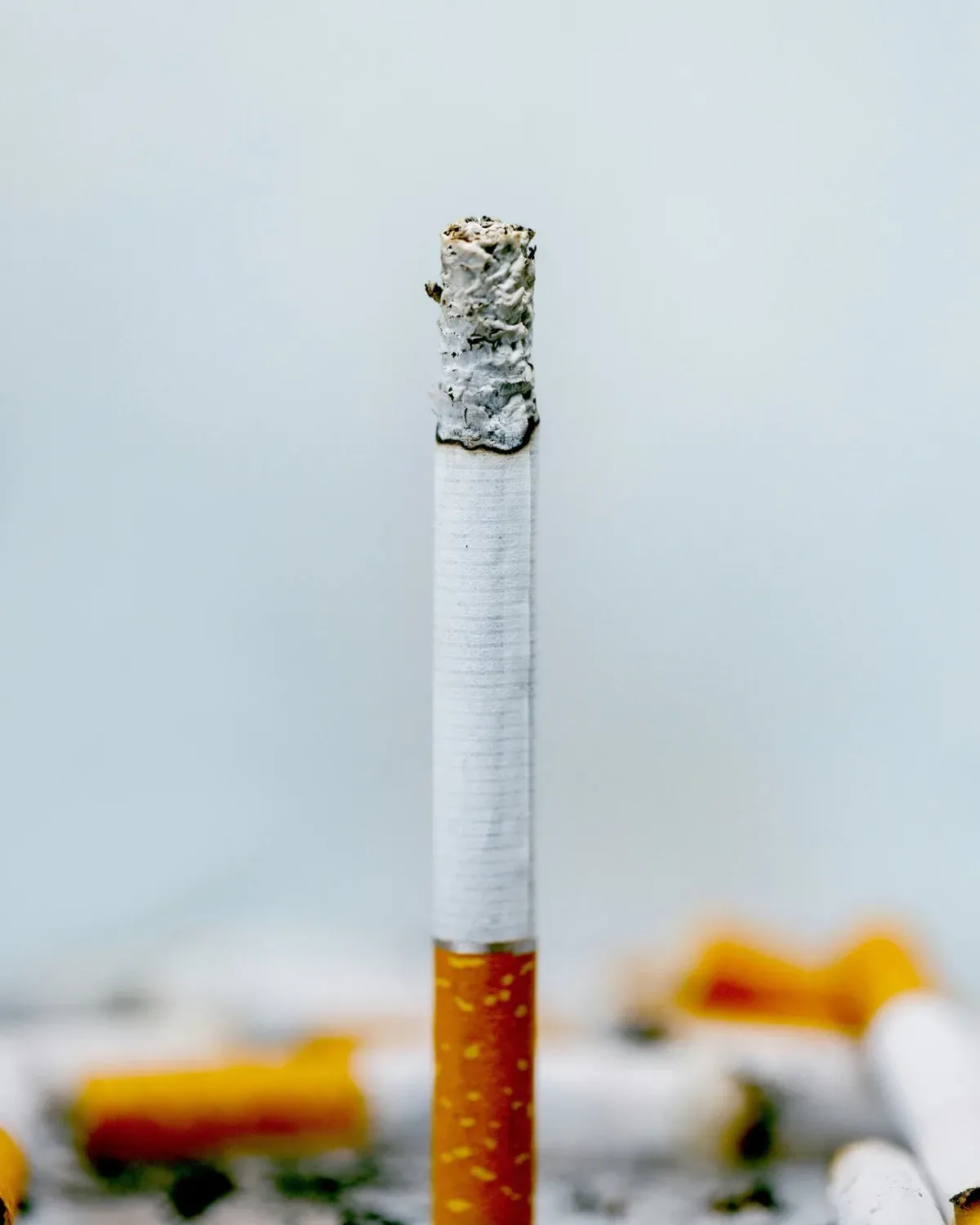
In brief — Smoking after oral surgery is not a minor detail: after an extraction it roughly triples the risk of dry socket (~13% vs ~4%), after an implant it raises failure risk by about 140%, and the effect rises with cigarettes per day. The critical window is the first 48–72 hours for extractions. For implants, the first weeks of osseointegration. And you should know that vaping and heated tobacco do not lower the risk.
The cigarette in the car park below the practice. I know it well. The patient walks out of surgery, still tense, understandably so. And the automatic reflex is to light up the moment they’re clear of the door. It’s the worst possible moment to do it, and I want to explain why.
“Don’t smoke after surgery” — everyone says it. Let’s look at the data instead.
What happens to the blood clot
After an extraction, the socket fills with a blood clot. It isn’t useless waste. It is the initial scaffolding on which all healing begins. If that clot is lost, bone is exposed and dry socket arrives — the most painful and most preventably avoidable complication of oral surgery. A deep, dull ache that sets in between day one and day five, often worse than the extraction itself.
Smoke attacks that clot on three fronts simultaneously. The suction of inhalation creates negative pressure that mechanically dislodges it. Nicotine is a vasoconstrictor. It reduces blood supply to injured tissues, exactly when they need more. And the combustion products interfere with repair cells. Three mechanisms, all working against healing.
The numbers confirm this without ambiguity. A systematic review and meta-analysis quantified the risk: in smokers, dry socket incidence is around 13.2%, versus 3.8% in non-smokers — more than a threefold increase (Kuśnierek et al., 2022). Clot loss through mechanical disturbance is one of the recognised mechanisms in the aetiology of dry socket (Ghosh et al., 2021).
After an extraction, wait out the 72-hour window
The practical rule I give my patients: as long as possible, and at an absolute minimum the first 48–72 hours.
That’s the window when the clot organises and stabilises. Reaching day five without smoking gets you past the period when dry socket typically sets in. For a habitual smoker that’s not trivial — but this is where the difference between an uneventful recovery and a week of real pain gets decided. You’ll find practical guidance on what to do during this phase in tooth extraction: what to do in the first 48 hours.
If you need a concrete reason to try just now: the day after an extraction, the urge for a cigarette coincides exactly with the moment that cigarette costs you the most.
After an implant. The first weeks are what count.
With an implant the timeframe shifts entirely. This isn’t about protecting a clot for a few days: it’s about letting bone fuse with the implant surface — osseointegration — a process that unfolds over weeks.
And smoking sabotages it measurably. A meta-analysis covering over 150,000 implants found that implants in smokers carry a failure risk 140% higher than in non-smokers, with greater marginal bone loss (Mustapha et al., 2021). That’s not a marginal difference — it’s more than double.
There’s also a dose effect. Another meta-analysis showed that risk rises with cigarettes per day: above 20 per day, patient-level failure risk reaches roughly four times that of a non-smoker (Naseri et al., 2020). Less smoking, less risk — the relationship is continuous, not all-or-nothing.
The firmest number landed in March 2026. Calciolari, Donos and the Queen Mary group in London pooled 44 studies with follow-up from one to seventeen years: implant survival in smokers falls to an odds ratio of 0.40 against non-smokers, and the bone around the implant recedes a further 0.64 millimetres (Calciolari et al., 2026). Those six tenths of a millimetre are the difference between an implant that still looks right and one that starts to show through.
It is worth knowing how smoking ranks against everything else. An umbrella review in the Journal of Prosthetic Dentistry went back over thirty-five meta-analyses on implant failure, from bone quality to implant length: no patient-related risk factor — diabetes among them — reached a high grade of correlation with failure, and smoking is the only one that comes close to being a probable cause (Giok et al., 2026). Among the things that depend on you, it is the one that weighs most.
My guidance for implants: abstain for as long as possible right after the procedure, ideally for several weeks. Not perfectionism, and not me being a nuisance. It is probably one of the differences between an implant that lasts decades and another that fails sooner. Smoking, alongside metabolic conditions, is also one of the factors that worsen swelling and the post-operative course.
What about e-cigarettes?
Patients ask me this more and more often. Or they assume that it doesn’t count as “smoking”.
“Do you smoke?”
“No, only Iqos.”
Unfortunately, it may well be the same thing.
The harm doesn’t come from combustion alone. The suction that dislodges the clot is identical with vaping or with any electronic cigarette. Nicotine, when present, remains a vasoconstrictor. And inhaled heat doesn’t help an open wound.
Here I have to be exact about what we know and what we don’t. The same 2026 review that measured the damage from cigarettes stops at smoke-free products and states that the available data are insufficient (Calciolari et al., 2026). Nobody has yet followed enough implants in people who vape to say how much the failure risk rises.
What we do know is the mechanism, and it is consistent. In the laboratory, e-cigarette aerosol applied to gingival fibroblasts on titanium disks reduces cell adhesion, proliferation and migration, and pushes the share of apoptotic cells — programmed cell death — from 0.75% to 5.25% (Choueiri et al., 2025). Those are cells in a dish, not patients. They do not prove your implant will fail. They do tell us that the cells which have to close the wound work worse and die early with electronic cigarettes, even without heat.
With strong biological and pathological evidence of mechanism and clinical evidence still missing, one choice is prudent, and there are no discounts on it. Heated tobacco and electronic cigarettes are to be treated like conventional cigarettes, at least during the same critical 48–72 hours. If and when more data arrive, this page will change accordingly.
An opportunity worth taking
Here I’ll make an observation that goes beyond the clinical, and I take it as a personal liberty of thought.
Surgery is one of the few moments when a smoker has an immediate, physical, concrete reason not to light up. It is not an abstract “you should quit”, but a very real “if you smoke today, tomorrow it may hurt badly”. Several patients who used an extraction or implant as a starting point for the first days of abstinence told me, months later, they never went back. It doesn’t always happen. But it happens.
I’m not saying it’s easy. I’m saying it is a good occasion to try.
What I say before they leave the practice
I tell patients at the practice the same thing every time after an extraction. Protect the clot for at least 48–72 hours, ideally five days. Don’t smoke, don’t drink or eat anything hot, don’t rinse hard, and skip mouthwashes. Give the bone its quiet weeks to heal. The risk figures are plain, and they deserve to be taken seriously.
Cover image: uitbundig on Unsplash, Unsplash licence.
Dr. Ernesto Bruschi — periodontist and oral implantologist, Centro Odontoiatrico Denti Più, Frosinone, Italy. ORCID: 0000-0002-4773-5384.
Having an extraction or implant and a smoking habit? Bring it up openly: at Studio Denti Più in Frosinone we plan the procedure around your real situation. Call +39 0775 889009 or write us on WhatsApp.
FAQ
How long should I wait to smoke after a tooth extraction?
Does smoking after a dental implant cause it to fail?
What is dry socket and what does smoking have to do with it?
Can I use an e-cigarette or heated tobacco after surgery?
References
- Mustapha AD, Salame Z, Chrcanovic BR. Smoking and Dental Implants: A Systematic Review and Meta-Analysis. Medicina (Kaunas). 2021;58(1):39. doi:10.3390/medicina58010039 · PMID: 35056347 · free full text
- Naseri R, Yaghini J, Feizi A. Levels of smoking and dental implants failure: A systematic review and meta-analysis. J Clin Periodontol. 2020;47(4):518-528. doi:10.1111/jcpe.13257 · PMID: 31955453
- Kuśnierek W, Brzezińska K, Nijakowski K, et al. Smoking as a Risk Factor for Dry Socket: A Systematic Review. Dent J (Basel). 2022;10(7):121. doi:10.3390/dj10070121 · PMID: 35877395 · free full text
- Ghosh A, Aggarwal VR, Moore R. Aetiology, Prevention and Management of Alveolar Osteitis-A Scoping Review. J Oral Rehabil. 2022;49(1):103-113. doi:10.1111/joor.13268 · PMID: 34625985
Go deeper
Espansione crestale (split crest) →Allargare la cresta senza trapianto — tecnica ERE e bonebending
Need a professional opinion?
Book an appointment at Dr. Bruschi's practice in Frosinone. First visit includes full diagnosis and personalised treatment plan.
Stai valutando un impianto dentale?
Ti hanno detto che non hai abbastanza osso, o ti hanno proposto un’arcata fissa? Ho scritto una guida di dieci pagine: le strade possibili, gli esami che servono e le dieci domande da fare prima di firmare.
Ricevi la guidaStay Updated
New articles on periodontology, implantology and oral surgery — delivered to your inbox.
Comments
Loading comments...
Leave a comment