Stress, bacteria and the gums in the holobiont model
Leggi in Italiano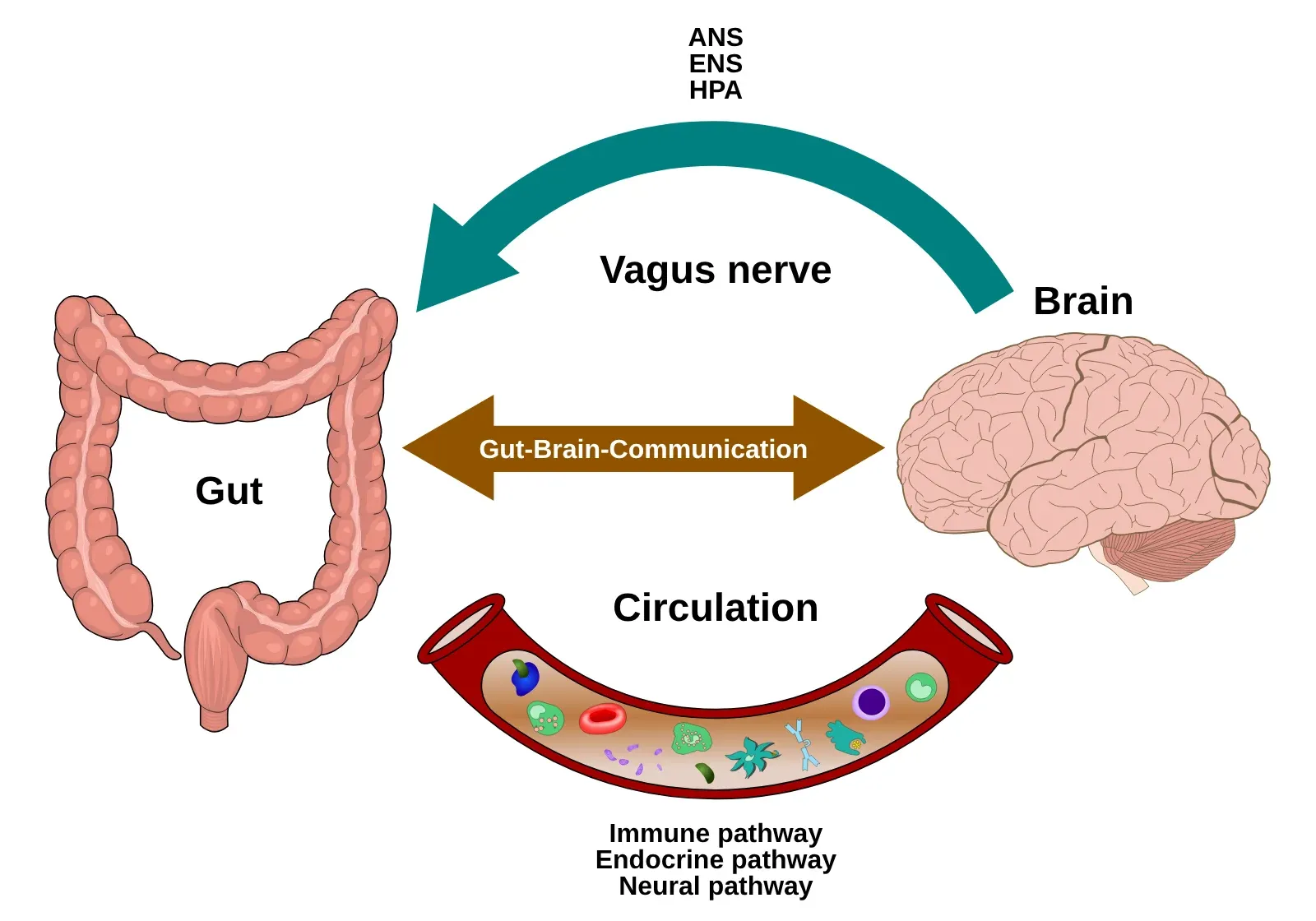
In brief — A 2026 Italian paper proposes adding the microbiota to Engel’s biopsychosocial model and treating a person and their bacteria as a single unit, the holobiont. It is a theoretical framework with no data of its own. Periodontology has been working on these links for years. Periodontitis is a dysbiosis, stress reduces the response to therapy, and oral bacteria colonise the gut. The practical consequences, for clinicians and patients, are concrete.
A model that puts bacteria next to the mind
In 1977 George Engel wrote in Science that the biomedical model was not enough to understand disease, and proposed considering biological, psychological and social factors together [2]. This is the biopsychosocial model, and clinical practice has given it little or no attention.
In August 2026 Massimo Agnoletti, of Humanitas University in Milan, published a narrative review in Qeios that adds a fourth element, the microbiota [1]. His bio-psycho-social holobiont model treats the person, their psychological and social context and the microbial communities that inhabit them as one functional unit. In this reading, health emerges from the “coherence” of the interactions between these levels, and disease from a loss of coordination among them.
The term holobiont refers to a host organism together with its microbiota and their genomes. It comes from evolutionary biology, and Bordenstein and Theis proposed ten principles for it in PLoS Biology in 2015 [3].
Agnoletti also proposes renaming the microbiota-gut-brain axis the “microbiota-gut-brain-mind axis”, to give the psychological component an explicit name. This is the author’s own terminological proposal, which refers back to one of his popular articles, and it has not entered common use.
He notes that a combined PubMed search for holobiont and biopsychosocial returns almost nothing. That points to how new the proposal is. It also means nobody has tested it yet, and in his conclusions the author calls it a preliminary theoretical framework that needs empirical validation.
Periodontitis was already a disease of an ecosystem
For anyone working on the periodontium, the idea that disease arises from an ecosystem has a long history. In 2012 Hajishengallis and Lamont described the PSD model, polymicrobial synergy and dysbiosis: periodontitis is initiated by a synergistic and dysbiotic microbial community rather than by select pathogens such as those of the red complex [4]. Some species, the keystone pathogens, modulate the host response and tip the balance towards dysbiosis. How this community differs around teeth and around implants is the subject of an earlier comparison of periodontal and peri-implant microbiota.
In 2015, in Nature Reviews Immunology, Hajishengallis defined periodontitis as a dysbiotic inflammatory disease with an adverse impact on systemic health, and described the mechanisms by which bacteria subvert the immune response, in the mouth and at distant sites [5].
Host and bacteria have been studied together for some time. The extreme case of this coexistence is the mitochondrion, which descends from bacteria engulfed by an ancient cell and is now part of every one of our cells.
From the mouth to the gut
For years the passage of oral bacteria into the gut was seen as a rare event and a sign of disease. In 2019 Schmidt and colleagues compared the microbial strains in saliva and stool of 470 people from five countries, across 310 species [6]. Transmission from the mouth to the gut, followed by colonisation, turned out to be common and extensive in healthy people too, and more frequent in patients with colorectal cancer and rheumatoid arthritis.
Kitamoto and colleagues, in Cell in 2020, showed in mice a mechanism linking periodontitis to gut inflammation [7]. Periodontitis expands oral pathobionts such as Klebsiella and Enterobacter. These are swallowed, reach the gut and activate the inflammasome there. At the same time, Th17 cells reactive to those bacteria form in the mouth, migrate to the inflamed gut and contribute to colitis. This is experimental work in animals, and in humans the mechanism remains to be shown.
From the brain to the bacteria
Agnoletti cites a study by Chang and colleagues, published in Cell in 2024, as an example of top-down influence [8]. In mice, the Brunner’s glands of the duodenum, stimulated by the vagus nerve, promote the growth of gut lactobacilli. The authors traced the circuit that connects these glands to the central nucleus of the amygdala. Chronic stress suppresses amygdala activity and reproduces the effects of removing the glands: fewer lactobacilli and greater vulnerability to infection. Stimulating the amygdala or the parasympathetic vagal neurons reverses these effects.
This too is work in mice, and it concerns the gut. I know of no study that has looked for a similar circuit for the oral microbiota.
Stress and the response to periodontal therapy
For the periodontium there is human evidence. In 2025 Mauland and Neupane published in the Journal of Clinical Periodontology a systematic review of 13 studies, with 1,610 participants, on how stress, depression and anxiety affect the response to periodontal therapy [9]. In the meta-analysis, stressed patients responded less to treatment. They gained less clinical attachment and their probing depth decreased less than in the other patients, but the authors rate their confidence in these estimates as limited or very low.
On the link between stress and having periodontitis, a 2022 meta-analysis found an odds ratio of 1.78 [10].
The biological mechanism is partly known, and I have written about the stress axis, cortisol and IL-10. Social factors are part of the picture too, as the data on marriage and gum health suggest.
What changes in clinical practice
The model does not, as yet, lead to new therapies. Its value is real all the same: it reminds the clinician that some of the variables affecting the health of the tooth-supporting tissues are systemic and psychological.
Stress belongs in the medical history. Alongside smoking and diabetes, it is worth asking about sleep, mood and recent life events, and recording them in the chart. It is certainly not the dentist’s job to diagnose an anxiety disorder or depression; but if the picture suggests one, the patient should be referred to the appropriate professional.
Expectations are stated in advance. If Mauland’s data hold for our patients too, someone going through a period of severe stress will probably respond less to the first phase of therapy. Saying so before re-evaluation keeps the patient from reading the result as their own failure or the clinician’s.
Cause-related therapy stays the same. None of the studies cited here shows that a probiotic, a supplement, a relaxation technique or a mindfulness programme can replace biofilm removal.
The limits of the model
Agnoletti’s paper is theoretical and presents no new data. The “coherence” it rests on is not yet a measurable quantity. The author proposes making it one through longitudinal studies that combine inflammatory and endocrine biomarkers, microbiota analyses, psychometric assessments and social variables, but those studies do not exist yet.
A model this broad is compatible with almost any result. It will become useful to research when it says what we should expect to measure, and what would refute it.
The venue matters too. Qeios is a publishing platform with open peer review, and the paper is listed as approved by its reviewers; it is not a periodontology or microbiology journal.
For a periodontist the concrete step is small, but perhaps important for seeing the person as a whole: one more question in the history, one more line in the chart, and an expectation stated before re-evaluation.
Cover image: “Gut-Brain Axis”, from Suganya K and Koo BS, vectorised by Mrmw, Wikimedia Commons, CC BY-SA 4.0.

References
- Agnoletti M. The Bio-Psycho-Social Holobiont Model of Health: Integrating the Biopsychosocial Paradigm, Microbiota Science, and Psychoneuroendocrinoimmunology. Qeios. 2026;8. doi:10.32388/RC9P2S.2
- Engel GL. The need for a new medical model: a challenge for biomedicine. Science. 1977;196(4286):129-136. doi:10.1126/science.847460 · PMID: 847460
- Bordenstein SR, Theis KR. Host Biology in Light of the Microbiome: Ten Principles of Holobionts and Hologenomes. PLoS Biol. 2015;13(8):e1002226. doi:10.1371/journal.pbio.1002226 · PMID: 26284777
- Hajishengallis G, Lamont RJ. Beyond the red complex and into more complexity: the polymicrobial synergy and dysbiosis (PSD) model of periodontal disease etiology. Mol Oral Microbiol. 2012;27(6):409-419. doi:10.1111/j.2041-1014.2012.00663.x · PMID: 23134607
- Hajishengallis G. Periodontitis: from microbial immune subversion to systemic inflammation. Nat Rev Immunol. 2015;15(1):30-44. doi:10.1038/nri3785 · PMID: 25534621
- Schmidt TS, Hayward MR, Coelho LP, et al. Extensive transmission of microbes along the gastrointestinal tract. eLife. 2019;8:e42693. doi:10.7554/eLife.42693 · PMID: 30747106
- Kitamoto S, Nagao-Kitamoto H, Jiao Y, et al. The Intermucosal Connection between the Mouth and Gut in Commensal Pathobiont-Driven Colitis. Cell. 2020;182(2):447-462.e14. doi:10.1016/j.cell.2020.05.048 · PMID: 32758418
- Chang H, Perkins MH, Novaes LS, et al. Stress-sensitive neural circuits change the gut microbiome via duodenal glands. Cell. 2024;187(19):5393-5412.e30. doi:10.1016/j.cell.2024.07.019 · PMID: 39121857
- Mauland EK, Neupane SP. The Influence of Psychological Stress and Stress-Related Disorders in the Treatment Outcome of Periodontitis: A Systematic Review and Meta-Analysis. J Clin Periodontol. 2025;52(12):1760-1778. doi:10.1111/jcpe.70022 · PMID: 40855968
- Aggarwal K, Gupta J, Kaur RK, et al. Effect of anxiety and psychologic stress on periodontal health: a systematic review and meta-analysis. Quintessence Int. 2022;53(2):144-154. doi:10.3290/j.qi.b2091191 · PMID: 34595909
FAQ
What is a holobiont?
Can stress really make periodontitis worse?
Can a probiotic replace periodontal therapy?
Isn't this just a new name for things we already know?
Should my dentist ask me about stress?
Cite this article
Ready for theses, slides and papers. If you cite it on a web page, make the URL a link so readers can reach the source.
Bruschi E. Stress, bacteria and the gums in the holobiont model [Internet]. Frosinone (Italy): Bonebenders; 2026 [cited 2026 Oct 30]. Available from: https://bonebenders.com/en/blog/holobiont-stress-oral-microbiome-periodontitis/ Bruschi, E. (2026, October 27). Stress, bacteria and the gums in the holobiont model. Bonebenders. https://bonebenders.com/en/blog/holobiont-stress-oral-microbiome-periodontitis/
@misc{bruschi2026holobiont,
  author       = {Bruschi, Ernesto},
  title        = {Stress, bacteria and the gums in the holobiont model},
  year         = {2026},
  month        = oct,
  howpublished = {Bonebenders},
  url          = {https://bonebenders.com/en/blog/holobiont-stress-oral-microbiome-periodontitis/},
  note         = {Accessed 2026-10-30}
} Go deeper
Espansione crestale (split crest) →Allargare la cresta senza trapianto — tecnica ERE e bonebending
Need a professional opinion?
Book an appointment at Dr. Bruschi's practice in Frosinone. First visit includes full diagnosis and personalised treatment plan.
Stay Updated
New articles on periodontology, implantology and oral surgery — delivered to your inbox.
Comments
Loading comments...
Leave a comment