In brief — “Pyorrhea” is the popular — and outdated — name for periodontitis. The term described a symptom (pus) rather than the disease. Today periodontitis is classified by stages and grades, diagnosed through periodontal probing, and treated with a stepwise protocol validated by European guidelines. This article explains what lies behind the name, why nomenclature changed, and where to find the answers that matter.
You search “pyorrhea” on Google. Thousands of people do it every month. The problem is that the name no longer exists in modern medicine. And the fact that it remains so widespread says something about the distance between what dentists know and what patients understand.
A name that describes the wrong symptom
Pyorrhoea alveolaris — from the Greek: pyon (pus) and rhoia (flow). Literally: discharge of pus from the alveoli. The term appeared in dental literature between the late nineteenth and early twentieth century, when periodontal disease was recognised mainly in its terminal phase: mobile teeth, suppurating gums, spontaneous tooth loss.
The problem is that pus is a late symptom. Periodontitis works for years — sometimes decades — before producing suppuration. The destruction of alveolar bone and periodontal ligament occurs silently, without pain, without pus. Calling the disease “pyorrhea” is like calling a heart attack “chest pain”: it describes what you see at the end, not what happens at the beginning.
The scientific community progressively abandoned the term over the twentieth century, replacing it first with “periodontitis” and then with the current system of precise diagnosis, classification and treatment.
What it is called today
Since 2017, periodontitis has been classified according to the framework of Tonetti, Greenwell and Kornman:
Stage (I-IV) — describes severity and case complexity. Stage I is the initial form. Stage IV includes tooth loss, masticatory function collapse, and the need for complex rehabilitation.
Grade (A-C) — describes the rate of progression and response to risk factors. Grade A progresses slowly. Grade C is the rapidly progressive form, often associated with heavy smoking or uncontrolled diabetes.
This classification has its limitations — I have discussed them here — but it represents an enormous leap from the old “you have pyorrhea.” It allows treatment to be personalised and a prognosis to be communicated, not merely a diagnosis.
The numbers that matter
Severe periodontitis affects 11.2% of the world’s population — approximately 743 million people — and is the sixth most prevalent condition globally (Kassebaum et al., 2014).
This percentage is, in all probability, significantly underestimated due to the “diagnostic divide” — a term I coined to describe the lack of widespread screening, particularly in less developed countries.
In Italy, estimates suggest 60% of adults over 35 have some form of periodontal disease, from initial gingivitis to advanced periodontitis.
The peak incidence is around age 38. This is not a disease of the elderly. It is a disease of adults who do not know they have it.
And it is important to remember that in some cases a particularly aggressive form is found in children and adolescents (classically termed “juvenile periodontitis”).
The signals pyorrhea sends (and you ignore)
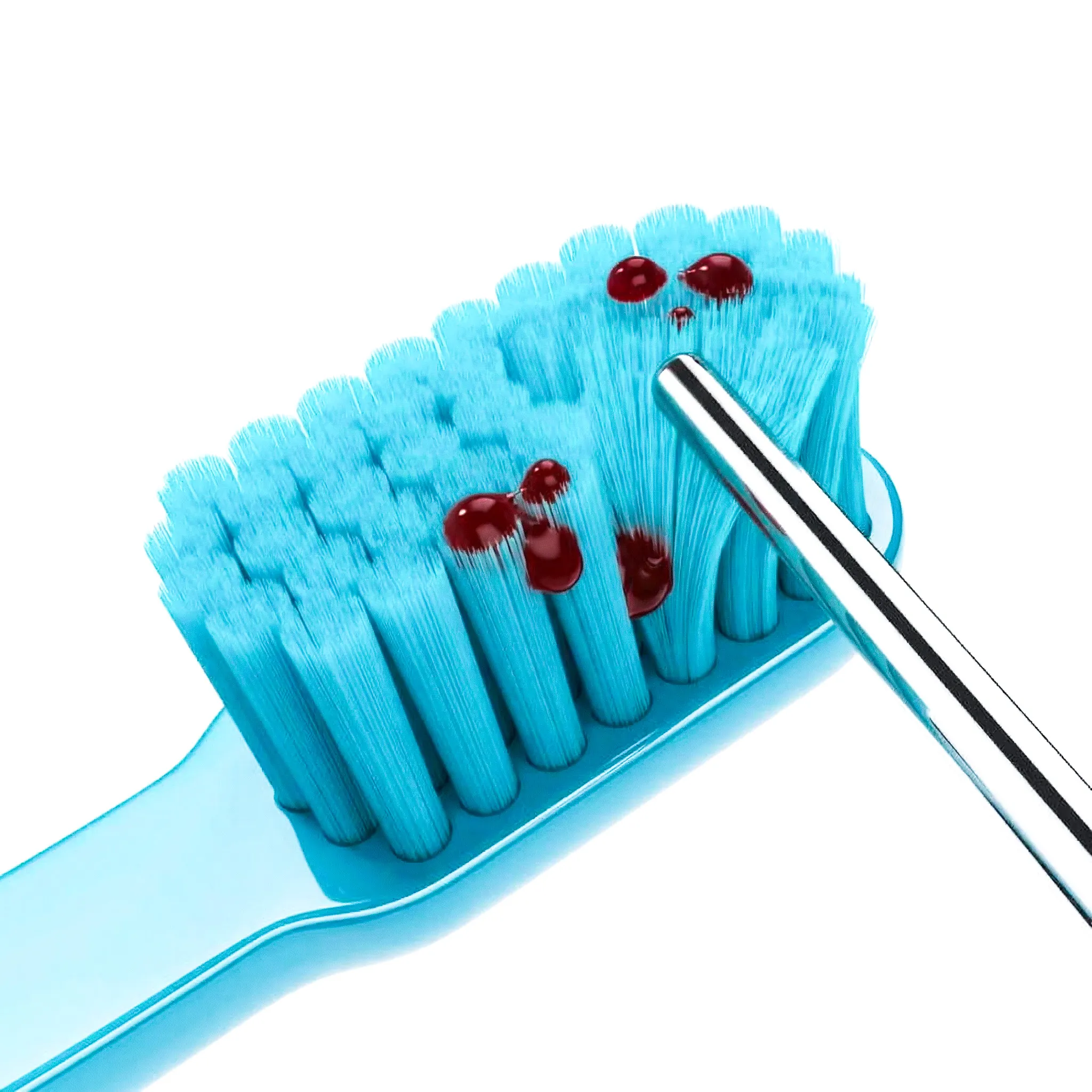
The first signal is gingival bleeding. Not pus — that comes later, if it comes. Blood on the toothbrush, gums that change colour, halitosis that will not resolve. Then recession: the teeth appear “longer.” Then mobility.
Sometimes none of these symptoms is accompanied by pain. This is the paradox of periodontitis: it causes enormous damage without generating pain. When pain arrives — with a periodontal abscess or terminal mobility — the damage is advanced.
How it is diagnosed
Not with radiographs alone. Not with a glance. Periodontal diagnosis requires complete periodontal probing, on every tooth present in the mouth. It is the only way to measure pocket depth, clinical attachment level, and bleeding on probing.
Our online calculator helps orient the picture, but does not replace the examination. Thirty minutes of probing are worth more than ten radiographs.
How it is treated today
Treatment follows the EFP S3 protocol, the European evidence-based guidelines (Sanz et al., 2020):
Step 1 — Cause-related therapy. Professional hygiene, personalised instructions, risk factor control. Smoking and uncontrolled diabetes are the two main accelerators of the disease. Without addressing them, the rest is palliative. And beware of mouthwashes: they can do more harm than good.
Step 2 — Subgingival instrumentation. Scaling and root planing, the core of non-surgical therapy. You enter the sulcus, remove the biofilm, smooth the root. Manola’s story shows what happens when this phase works — and how much patience it requires.
Step 3 — Periodontal surgery. Reserved for non-responding cases. Resective or regenerative, depending on the defect. Keratinised gingiva protects the result over time. When is a gingival graft needed and when not? It depends on the case.
Step 4 — Supportive therapy. Maintenance is forever. Like diabetes, like hypertension. Those who stop attending recall appointments start over. Frequency depends on the risk profile: every three months for complex patients, every six to twelve for stable ones.
And laser? The EFP guidelines do not recommend it as an alternative to mechanical instrumentation. It may be an adjunct, but not a solution.
Pyorrhea and systemic diseases: what we know
Periodontitis does not remain confined to the mouth. Research over the past twenty years has documented associations with important systemic conditions:
Alzheimer’s — Porphyromonas gingivalis has been found in brain tissue of Alzheimer’s patients. Pregnancy — untreated periodontitis is associated with preterm birth and low birth weight. Obesity and GLP-1 — the inflammatory triangle between periodontitis, obesity and insulin resistance. Breast cancer — an emerging association mediated by the oral microbiome.
Gingival bacteria do not stay where you think. They invade cells, enter the bloodstream, reach distant organs. “Pyorrhea” is not a cosmetic problem — it is a general health problem.
Why people still search for “pyorrhea”
Because it was the first term used to describe this disease and carries a strong negative, terrifying connotation. It is like the name “Dracula” — few remember the names of other cinematic vampires.
For decades, the name “pyorrhea” was used as a synonym for doom — “you have pyorrhea, you’ll lose all your teeth” — without nuance, without staging, without prognosis. The patient internalised the terror but not the science.
Today those who search “pyorrhea” are really looking for answers to three questions: do I have it? Is it serious? Can it be treated? The answer to all three depends on periodontal probing, not on the name you give the disease.
References
- Caton JG, Armitage G, Berglundh T, et al. A new classification scheme for periodontal and peri-implant diseases and conditions. J Clin Periodontol. 2018;45 Suppl 20:S222-S233. PubMed
- Tonetti MS, Greenwell H, Kornman KS. Staging and grading of periodontitis: Framework and proposal of a new classification and case definition. J Clin Periodontol. 2018;45 Suppl 20:S149-S161. PubMed
- Sanz M, Herrera D, Kebschull M, et al. Treatment of stage I-III periodontitis — The EFP S3 level clinical practice guideline. J Clin Periodontol. 2020;47 Suppl 22:4-60. PubMed
- Kassebaum NJ, Bernabé E, Dahiya M, et al. Global burden of severe periodontitis in 1990-2010: a systematic review and meta-regression. J Dent Res. 2014;93(11):1045-1053. PubMed
Bleeding gums that will not stop? Book a periodontal assessment — early diagnosis changes the prognosis.
FAQ
What is pyorrhea?
Are pyorrhea and periodontitis the same thing?
What are the symptoms of pyorrhea?
How is pyorrhea treated today?
Is pyorrhea hereditary?
Can teeth be saved with pyorrhea?
Does laser cure pyorrhea?
References
Go deeper
Espansione crestale (split crest) →Allargare la cresta senza trapianto — tecnica ERE e bonebending
Need a professional opinion?
Book an appointment at Dr. Bruschi's practice in Frosinone. First visit includes full diagnosis and personalised treatment plan.
Stay Updated
New articles on periodontology, implantology and oral surgery — delivered to your inbox.
Comments
Loading comments...
Leave a comment