Immediate Loading: Great Treatment, Wrong Hands
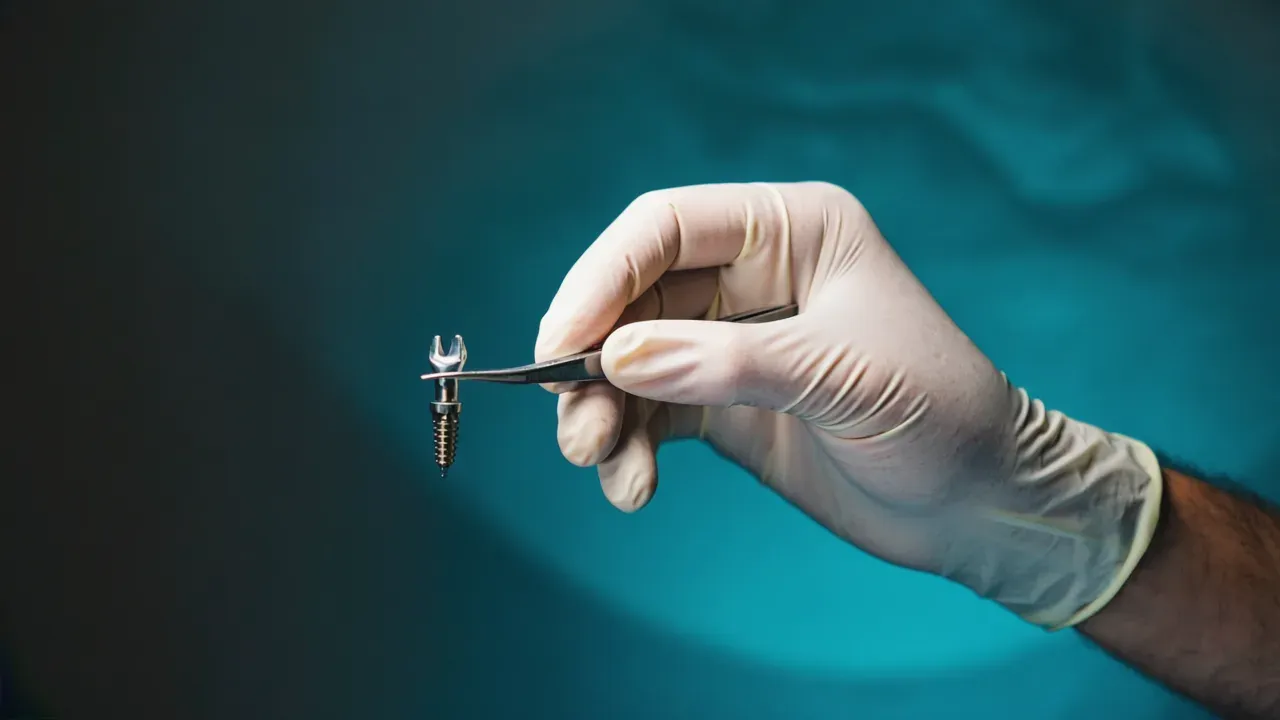
In brief — Immediate loading is one of the most reliable treatments in modern implantology. It turns bad not because of a flaw in the technique, but when it is sold as a one-size-fits-all protocol: same solution, same arch, same promise, regardless of the patient. The difference between success and failure lies not in the tool, but in the diagnosis that precedes it and the hand that wields it.
There are treatments that work.
And then there is the way they are done.
Immediate loading belongs to the first category without question. Giving back fixed teeth within twenty-four hours, avoiding months of a removable temporary, one surgery instead of two: when the conditions are there, it’s one of the most beautiful things implant dentistry can do.
And yet it sometimes ends badly. Often. And when I dig into why, the technique is almost never to blame.
The tool and the hand
A scalpel in the right hands saves a life. The same scalpel, in the wrong hands, ruins one.
Nobody blames the steel.
With immediate loading the opposite happens. When it goes wrong, the blame goes to immediate loading. “Immediate-loading implants fail,” people say. It isn’t true. What fails is almost always the decision to apply it there, to that patient, in that mouth, without the conditions being met.
The technique doesn’t choose the patient. The clinician does. And that’s where everything begins.
From indication to slogan
There’s a trend, in Italy and beyond, that deserves to be looked at squarely.
A technique born as an indication — that is, the right answer to a precise situation — has turned into a slogan. From “in this case immediate loading is possible” to “we do immediate loading.” From answer to product.
And the product, to sell well, has to be the same for everyone. Same arch, same number of implants, same fancy acronym, same quote. The standardized full-arch protocol becomes the answer to a question no one has time to ask any more: does this specific patient actually need it?
Because the uncomfortable truth is this: to offer the complete arch with immediate loading to anyone, you first have to extract. Sometimes extract teeth that could have been saved for years. You sacrifice natural bone, proprioception, original gum. You start from a mouth with some problems and you empty it to make it fit a protocol.
The protocol doesn’t adapt to the patient. It’s the patient who gets adapted to the protocol.
The assembly line
This logic has found its most extreme form in a phenomenon we all know: dental tourism, complete rehabilitations done abroad in a few days, at prices that seem impossible.
I want to be honest and measured. There are excellent professionals everywhere, and geography is not a fault. The problem isn’t the country. It’s the model.
The model is the assembly line: high volume, compressed times, a single session, no return. It works beautifully for producing identical objects. It works terribly for treating different people.
Because complex implant work doesn’t end the day the implants are screwed in. It begins. It needs check-ups, maintenance, the management of complications when they show up — and sooner or later, in a mouth, something shows up. When the rehabilitation was done a thousand kilometers away, in one afternoon, without follow-up, the complication doesn’t travel back with the patient. It stays here. And it ends up on the desk of whoever handles it afterwards.
The initial saving was real. But it was only a down payment.
Why the same treatment fails
Let’s get concrete. When I see an immediate loading gone wrong, the reasons are almost always the same three. None of them is about the technique.
The first is missing primary stability. Immediate loading lives on a mechanical premise: the implant, just placed, must be firm enough to bear the load while the bone integrates it. There’s a threshold, and we’ve known it for decades: above 50-150 microns of micromotion, the interface doesn’t osseointegrate, it gets encapsulated in fibrous tissue (Szmukler-Moncler et al., 1998). If that stability isn’t there — rarefied bone, poor quality, a freshly grafted site — and you load anyway because “the protocol says so,” micromotion kills osseointegration at birth. It’s not bad luck. It’s physics ignored.
The second is skipped case selection. A heavy smoker who won’t quit, an uncontrolled diabetic, an unmanaged bruxist, an active infection. These are conditions in which immediate loading should be postponed or avoided. In a real assessment, they surface. On an assembly line, there’s no time to look for them.
The third is absent maintenance. Even perfect work, without check-ups over time, slides toward peri-implantitis. Immediate loading is not an event. It’s the start of a relationship that lasts years.
Take away the diagnosis, take away the selection, take away the follow-up: what’s left is an excellent technique resting on nothing. And it collapses.
Immediate loading done well
Now the right part of the story, because I wouldn’t want the wrong message to come across.
When the indications converge, immediate loading is extraordinary. And this isn’t shop enthusiasm: systematic reviews show that, with rigorous selection criteria for the patient and the site, survival is high (Hamilton et al., 2023). At equal indication it holds up against early loading; but when it’s forced over the delayed protocol, the incidence of failures rises (Chen et al., 2019). Translated: the technique is excellent where it’s indicated, and becomes risky exactly to the extent it’s applied where it isn’t. And in many cases the complete arch with immediate loading isn’t the commercial choice: it really is the best one, and the most refined.
The difference isn’t what you do. It’s how you arrive at deciding it.
You start from the patient, not from the technique. You assess every tooth one by one, periodontal probe in hand. You measure the bone, the mucosa, the density, the prognosis. You ask whether that specific anatomy needs four, five, or six implants, and at what angulation. You combine approaches: conservative where it can be saved, immediate loading where the bone allows, regeneration where it’s needed. It’s tailoring, not wholesale.
The same identical treatment, immediate loading, in one case is the most elegant gesture in implant dentistry. In the other it’s harm. The tool hasn’t changed. The hand has.
One question, before you sign
If you’re weighing a major rehabilitation, there’s just one question worth asking. Not “what technique do you use,” but:
Does the solution you’re proposing exist only for my mouth, or is it the same one you propose to everyone?
If the answer is the second, stop. Not because immediate loading is wrong — it’s right. But because an excellent treatment, applied without looking at who’s in front of you, stops being care and becomes a product off the shelf.
And you are not a standard size. To choose who puts their hands in your mouth, start here.
FAQ
Is immediate loading a dangerous technique?
Why can the same treatment succeed brilliantly or fail?
Is it worth getting immediate loading abroad to save money?
How do I know if immediate loading is really indicated in my case?
References
- Hamilton A, Gonzaga L, Amorim K, et al. Selection criteria for immediate implant placement and immediate loading for single tooth replacement in the maxillary esthetic zone: A systematic review and meta-analysis. Clin Oral Implants Res. 2023;34 Suppl 26:304-348. doi:10.1111/clr.14109 · PMID: 37750515
- Chen J, Cai M, Yang J, et al. Immediate versus early or conventional loading dental implants with fixed prostheses: A systematic review and meta-analysis of randomized controlled clinical trials. J Prosthet Dent. 2019;122(6):516-536. doi:10.1016/j.prosdent.2019.05.013 · PMID: 31421892
- Szmukler-Moncler S, Salama H, Reingewirtz Y, et al. Timing of loading and effect of micromotion on bone-dental implant interface: review of experimental literature. J Biomed Mater Res. 1998;43(2):192-203. doi:10.1002/(sici)1097-4636(199822)43:2<192::aid-jbm14>3.0.co;2-k · PMID: 9619438
Cite this article
Ready for theses, slides and papers. If you cite it on a web page, make the URL a link so readers can reach the source.
Bruschi E. Immediate Loading: Great Treatment, Wrong Hands [Internet]. Frosinone (Italy): Bonebenders; 2026 [updated 2026 Jun 12; cited 2026 Sep 27]. Available from: https://bonebenders.com/en/blog/2026-06-12-carico-immediato-ottimo-trattamento-mani-sbagliate/ Bruschi, E. (2026, June 12). Immediate Loading: Great Treatment, Wrong Hands. Bonebenders. https://bonebenders.com/en/blog/2026-06-12-carico-immediato-ottimo-trattamento-mani-sbagliate/
@misc{bruschi20262026,
  author       = {Bruschi, Ernesto},
  title        = {Immediate Loading: Great Treatment, Wrong Hands},
  year         = {2026},
  month        = jun,
  howpublished = {Bonebenders},
  url          = {https://bonebenders.com/en/blog/2026-06-12-carico-immediato-ottimo-trattamento-mani-sbagliate/},
  note         = {Accessed 2026-09-27}
} Go deeper
Espansione crestale (split crest) →Allargare la cresta senza trapianto — tecnica ERE e bonebending
Need a professional opinion?
Book an appointment at Dr. Bruschi's practice in Frosinone. First visit includes full diagnosis and personalised treatment plan.
Stai valutando un impianto dentale?
Ho scritto una guida in 8 capitoli che spiega tutto quello che un paziente dovrebbe sapere prima di sedersi in poltrona. Niente marketing — solo fatti, casi studio e una checklist per fare le domande giuste.
Scarica la guidaStay Updated
New articles on periodontology, implantology and oral surgery — delivered to your inbox.
Comments
Loading comments...
Leave a comment