"Bone Expansion Is Niche" — The Myth That Holds You Back
Leggi in Italiano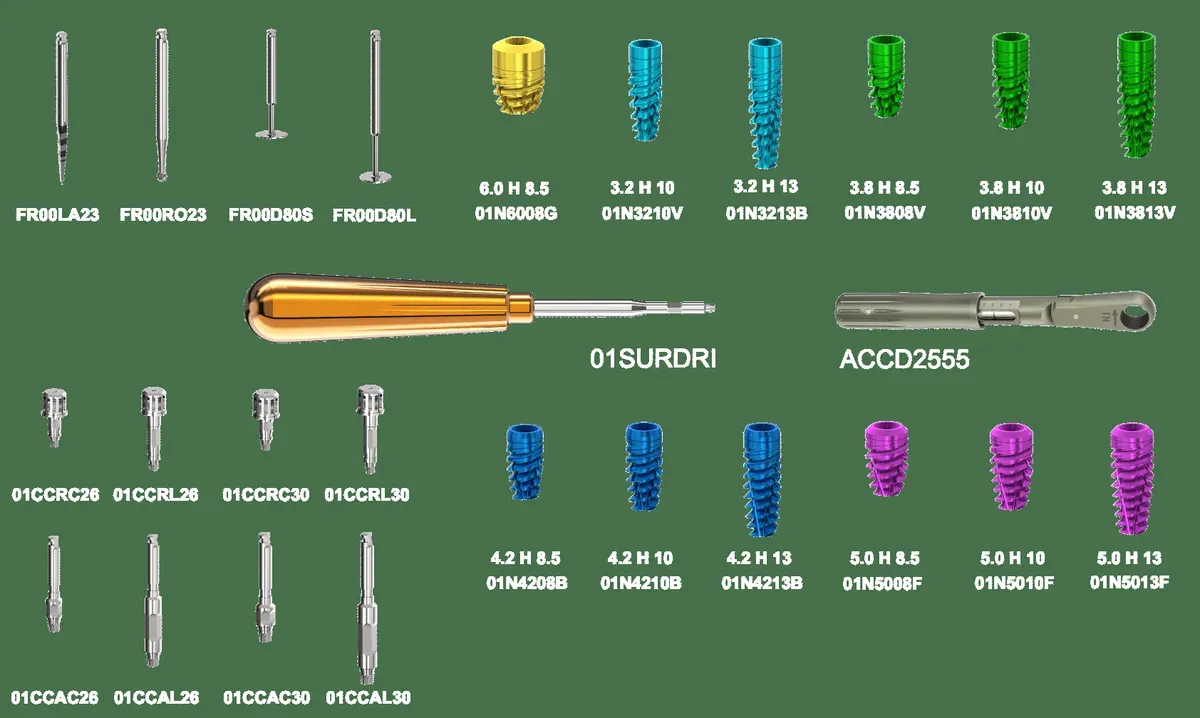
In brief — Bone expansion is not a niche technique but the safest way to prepare any implant site. Bonebenders instruments work alongside traditional drills in the same appointment, making every case more controlled, predictable and stable without changing your implant system.
Bone Expansion: Beyond the Niche Myth
Let’s be blunt: bone expansion is not a niche technique at all.
It’s a lie they keep telling you. And you know who profits from it? Whoever wants you to believe that “advanced” implantology is only for a chosen few.
You spot them right away. They’re the ones trying to sell you the new drill with rotating blades, or the latest diamond-tipped model.
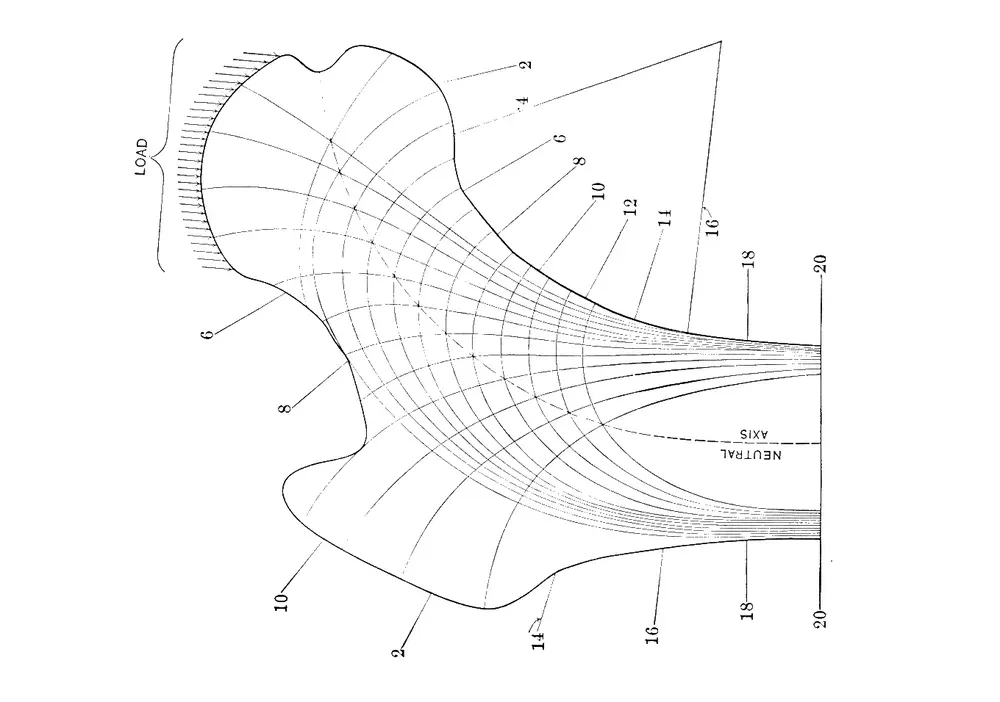
They’re the ones who forget that human bone isn’t a piece of wood — it’s a complex composite biological system.
It’s also an architectural system, made of arches and over-arches.
But I’ll lose you if I don’t get to the point. So here it is…
The Bonebenders are the only ones who treat human bone for what it really is, a system with elasticity and plasticity. And this holds for every dimension and bone density: not just for the atrophic bone-expansion cases!
The Bonebenders instruments are instruments for everyday implantology. For every case. Even the “perfectly ordinary” one you’ll do tomorrow morning at 9:00 in a 3-cubic-centimetre socket.
Because while bone expansion in atrophic cases can be demanding — though less so than the alternatives — the bone-expansion instruments are safe, fast and atraumatic for all your cases! Including in combination with the drills of any implant kit.
The Truth That Changes Everything
They’ve made you believe bone expansion is “specialist stuff”. An advanced technique for borderline cases.
False.
Bone expansion is simply the smartest way to prepare ANY implant site. Even the one that already looks “perfect” to you.

And you know why nobody tells you? Because if you found out, you’d no longer need to postpone cases, delegate them to others, live in anxiety, and spend money on machines and assorted software.
Bonebenders instruments are used TOGETHER with your normal drills. In the same appointment. For the same case you always do.
The difference? Everything becomes magically simpler, safer, more progressive, more controlled, more predictable.
Even if you have no intention of doing a split crest or crestal sinus lifts.
The Secret Is Simple: They’re Not “Extra” Instruments
Here’s what you need to grasp:
Bonebenders instruments do NOT replace your drills.
They FLANK them. They COMPLETE them. They make them more effective.
And you don’t even have to change implants. The system you already use is fine.
Same appointment. Same protocol. Same patient. Same “normal” case.
But with a completely different result:
More control because the instruments are self-guiding — you follow the natural direction. More safety because you compress instead of drilling, making accidental perforation impossible. More stability because you densify as you prepare, automatically. More predictability because you know exactly where you’re going, millimetre by millimetre.
And the best part? If mid-procedure you decide to expand a little, you do it. In an instant.
Bone expansion isn’t an on/off switch. It’s a dynamic spectrum, a Gaussian curve. You go from 0.5 mm to 3 mm without changing systems.
Voilà. Done.
You Have a Safe, Easy, Self-Guiding System… and You’re Not Using It?
Then maybe you just haven’t got there yet.
And that’s fine. Nobody is born knowing everything (least of all the person writing this, who knows he has plenty to learn). But let me show you what you’re missing.
”I’m Not Ready to Place Implants”
Afraid to start with implantology? That’s normal.
Site preparation, direction control, primary stability — they’re real challenges when you use drills alone.
But with the Bonebenders instruments
The system is self-guiding. The instrument tells you where it’s going. It guides you step by step.
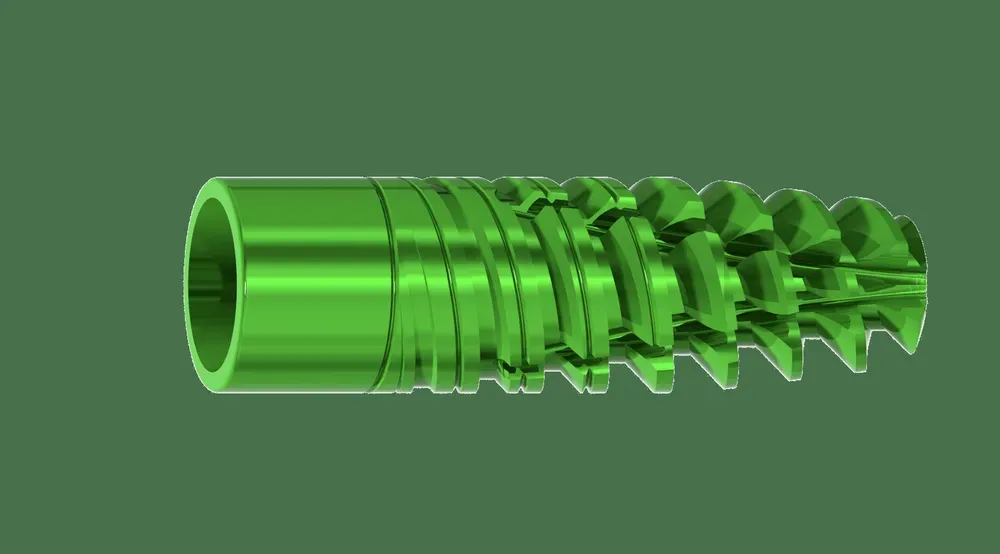
You’re not “trying and hoping”. You’re executing with total control.
That fear? It vanishes by the second case. Because you realise it’s simpler than you thought.
”I’d Like to Delegate But I Don’t Trust It”
You have an associate who could handle implants. But you don’t feel comfortable letting them operate.
I understand. Implantology demands precision. A mistake is expensive.
What if there were a system so intuitive that even a less experienced operator could work safely?
The Bonebenders instruments are exactly that. Self-guiding. Predictable. Safe.
You’re not lowering standards. You’re raising safety for everyone.
Delegating becomes possible. Without stress. Without needless risk.
”I Don’t Do Bone Expansion, I Only Do Normal Cases”
There it is again, the crux. This is exactly the myth you need to bust.
Bonebenders instruments are NOT just “for bone expansion”. They’re for ALL your cases.
Including the “perfectly ordinary” one tomorrow morning.
You use them together with the drills. Same appointment. Same protocol.
And everything becomes magically simpler: “barely sufficient” bone becomes optimal, a thin cortex you compress but never perforate, a direction to control and the instruments guide you, scarce density and you densify as you prepare.
You’re not doing “advanced bone expansion”. You’re doing implantology the way it should be done.
And if, mid-procedure, you want to expand half a millimetre more? Voilà. Already done. You barely notice.
True bone expansion? It’s just “carrying on a little further”. Same system. Zero complications.
Tomorrow Morning’s Case
Tomorrow, 9:00. Your first patient walks in.
You look at the CT. 5 mm ridge. Thin cortex. C2 density.
WITHOUT Bonebenders: “It’s enough… I think. It should hold. I hope. Maybe use a smaller drill? Go slow? Use densifying burs?”
Stress. Uncertainty. Fingers crossed.
WITH the Bonebenders system: “Perfect. I prepare with a Bonebender + drills, it compresses the cortex, densifies the bone, guides the direction. Perfect stability.”
Control. Safety. You know exactly what to expect.
Same case. Two completely different realities.
Which one do you want to live?
Reality Is Simpler Than You Think
You don’t need to overhaul your protocol. You don’t need complicated courses. You don’t need to become a “bone-expansion expert”.
You don’t need to change implant system.
(As long as it isn’t downright awful… like many are.)
You only need to start using Bonebenders instruments TOGETHER with your normal drills.
Same workflow. Same appointment. Same kind of cases.
But with completely different results: “normal” cases become more predictable because you no longer hope it’ll “hold”, you know it will. “Borderline” cases become feasible because that ridge you’d have postponed you now manage. Less experienced operators can work safely because the self-guiding system protects them. Bone expansion when you need it is already done, whether half a millimetre or three, you decide, same system.
It’s not magic. It’s simply the safest way to work.
Don’t Believe Me. Believe the Numbers.
So far I’ve told you what’s in my head. Fair enough if you don’t trust it. So let’s look at the data, which has no opinions.
The meta-analysis by Lin and colleagues (BMC Oral Health, 2023) pooled 25 studies on crestal expansion: a mean bone-width gain of 3.35 mm and implant survival of 98.1%. That’s not nothing. It’s a thin ridge becoming a real implant site, with implants that stay put.
Then there’s the systematic review by Azadi and colleagues (Oral and Maxillofacial Surgery, 2025), which looked only at cases where the implant is placed in the same appointment as the expansion, without adding biomaterials. Result: survival 100%, complications 0%. That’s exactly the everyday gesture I’m describing — you expand and you place, all at once — and the literature says it works.
Want to know why it works? Because you’re not drilling: you’re compressing. The meta-analysis by López-Valverde and colleagues (Frontiers in Bioengineering and Biotechnology, 2025) showed that expansion, compaction and densification significantly increase bone density, ridge width and — what really matters — the ISQ, that is primary stability. You densify as you prepare. It’s not marketing: it’s bone mechanics.
And for anyone still afraid to start, the review by Luo and colleagues (Clinical Implant Dentistry and Related Research, 2024) spells it out in black and white: the split/expansion technique is minimally invasive, reduces morbidity and surgical time, and allows immediate implant placement. Less trauma for the patient, less chair time, the same predictable result.
Four papers, four independent groups, the same direction. Expansion isn’t a gamble. It’s one of the most documented things you can do to a ridge.
Start Today, Not Tomorrow
You don’t have to take my word for it. Now you have the numbers too. You don’t have to buy anything right away, and certainly not from me.
You just have to stop believing the myth that “bone expansion is niche”.
Because otherwise we’re going to fall out.
Because it isn’t. It’s your daily work made simpler and safer.
STEP 1: Sign Up Free to the Bonebenders Site
Subscribe
Enter your email below to receive updates.
STEP 2: Join the Colleagues-Only Forum
Plenty of fellow dentists who every day share “normal” cases handled with Bonebenders protocols, help each other with practical operative doubts, prove this approach is routine and not exception, and swap opinions and tricks of the trade.
No guru. No theory. Just colleagues who work like you.
Join the Bonebenders Solo Espansione community on WhatsApp. That’s where colleagues discuss real cases, no filters.
STEP 3: Try It on Your Next “Normal” Case
You don’t need to wait for “the perfect case”.
Take the first everyday case you’ve got. The one you’d do anyway.
Use the Bonebenders instruments + drills together. Same protocol. Same appointment.
Feel the difference in control. See the difference in predictability. Measure the difference in stability.
Then tell me if you want to go back to being just a carpenter.
The Question You Need to Ask Yourself
The question isn’t: “Should I learn bone expansion?”
The real question is:
“Why am I still working without a simple system that makes every case of mine safer, easier and more predictable?”
Bone expansion isn’t niche. It isn’t for “specialists”. It isn’t a separate technique.
It’s simply the smart way to use the right instruments, every day, for every case.
Including the “perfectly ordinary” one tomorrow morning.
The instruments exist. The system works. Colleagues use it daily.
What’s stopping you?
Maybe it’s just that you haven’t got there yet.
And that’s fine. Now you have.
For more: visit dentipiu.it for clinical information, or read the scientific literature on alveolar crestal expansion.
References
- Azadi A, Hazrati P, Tizno A, Rezaei F, Akbarzadeh Baghban A, Tabrizi R. Bone expansion as a horizontal alveolar ridge augmentation technique: a systematic review and meta-analysis. Oral Maxillofac Surg. 2025;29(1):32. doi:10.1007/s10006-025-01335-5 · PMID: 39808204
- López-Valverde N, López-Valverde A, Blanco JA. Effectiveness of bone expansion, compacting and densification in narrow alveolar crests: a systematic review and a meta-analysis. Front Bioeng Biotechnol. 2025;13:1630495. doi:10.3389/fbioe.2025.1630495 · PMID: 40635692
- Lin Y, Li G, Xu T, Zhou X, Luo F. The efficacy of alveolar ridge split on implants: a systematic review and meta-analysis. BMC Oral Health. 2023;23(1):894. doi:10.1186/s12903-023-03643-2 · PMID: 37986181
- Luo F, Mo Y, Jiang J, Wen J, Ji Y, Li L, Wan Q. Advancements in dental implantology: the alveolar ridge split technique for enhanced osseointegration. Clin Implant Dent Relat Res. 2024;26(5):1012-1031. doi:10.1111/cid.13363 · PMID: 39075020
FAQ
Is bone expansion really suitable for every implant case?
Do I have to change my implant system to use the expanders?
Are self-guiding instruments really safe for less experienced operators?
How much extra time does using expanders add to site preparation?
Can I move from standard preparation to true bone expansion during the same surgery?
What happens with very low-density bone or a very thin cortex?
Is there scientific evidence for the effectiveness of ridge expansion?
Cite this article
Ready for theses, slides and papers. If you cite it on a web page, make the URL a link so readers can reach the source.
Bruschi E. "Bone Expansion Is Niche" — The Myth That Holds You Back [Internet]. Frosinone (Italy): Bonebenders; 2025 [updated 2026 Jul 6; cited 2026 Oct 15]. Available from: https://bonebenders.com/en/blog/bone-expansion-not-a-niche-technique/ Bruschi, E. (2025, October 17). "Bone Expansion Is Niche" — The Myth That Holds You Back. Bonebenders. https://bonebenders.com/en/blog/bone-expansion-not-a-niche-technique/
@misc{bruschi2025bone,
  author       = {Bruschi, Ernesto},
  title        = {"Bone Expansion Is Niche" — The Myth That Holds You Back},
  year         = {2025},
  month        = oct,
  howpublished = {Bonebenders},
  url          = {https://bonebenders.com/en/blog/bone-expansion-not-a-niche-technique/},
  note         = {Accessed 2026-10-15}
} Go deeper
Espansione crestale (split crest) →Allargare la cresta senza trapianto — tecnica ERE e bonebending
Need a professional opinion?
Book an appointment at Dr. Bruschi's practice in Frosinone. First visit includes full diagnosis and personalised treatment plan.
Stai valutando un impianto dentale?
Ti hanno detto che non hai abbastanza osso, o ti hanno proposto un’arcata fissa? Ho scritto una guida di dieci pagine: le strade possibili, gli esami che servono e le dieci domande da fare prima di firmare.
Ricevi la guidaStay Updated
New articles on periodontology, implantology and oral surgery — delivered to your inbox.
Comments
Loading comments...
Leave a comment