Are You Still in Love with Smooth Implants?
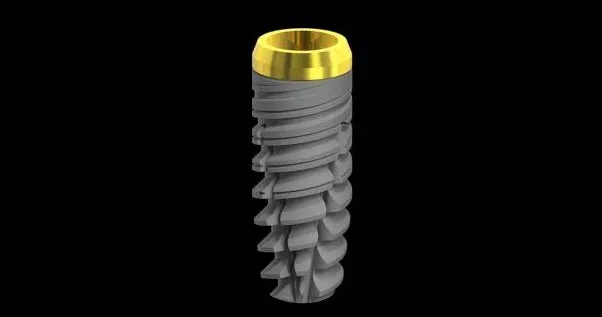
In brief — Implant macrogeometry, not the smooth surface, decides primary stability. Conical bodies with aggressive threads, larger diameter and length up to 12 mm outperform smooth cylinders. Hybrid and expansive designs distribute forces better than traditional shapes. But more insertion torque is not the same as more stability — and the right design is the one chosen for the specific site.
The narrative review titled “How does dental implant macrogeometry affect primary implant stability? A narrative review.”, published in the International Journal of Implant Dentistry, explores the critical role of dental implant macrogeometry in determining primary stability — the foundation of successful osseointegration during early healing and of long-term implant function.
It confirms concepts already dissected at length in earlier work: surface morphology, the overall shape of the body and of the threads, and the stability that follows from them are essential to healing and to the integration of the implants themselves.
In essence, it is a return to the past after years of excessive blame heaped on certain surfaces (Titanium Plasma Spray, TPS) and certain implant philosophies (the Italian School / one-stage implantology) that had, in fact, already made giant strides in immediate loading.
The study’s key findings:
How macrogeometry affects stability
The review highlights several macrogeometric factors that influence primary stability:
Diameter: wider implants increase the contact area with surrounding bone, improving stability. This matters most during the initial stabilization phase.
Shape: conical or tapered “root-form” implants tend to achieve greater primary stability than cylindrical ones. The reason is their expansive design, which distributes forces effectively and compresses the surrounding bone laterally. That lateral compression is what builds stability during insertion.
Surface features: rough surfaces improve mechanical interlock with bone, adding to initial stability. Surface morphology and macrogeometry can meaningfully shape how the implant integrates during osseointegration.
Length: longer implants generally offer better primary stability thanks to more surface for osseointegration, but the benefit plateaus past a certain point (around 12 mm) — beyond which other factors carry the weight and length matters less.
Implant length favours stability and osseointegration up to 12 mm. Past 12 mm, its influence becomes less important.
Thread design
Thread design also shapes primary stability. The studies in the review suggest that:
V-shaped (sharp) threads show higher primary stability than square-section threads. Thread geometry governs how forces are transmitted through the implant and into the surrounding bone.
Hybrid designs, combining different thread forms or features, offer stability superior to traditional designs.
Clinical implications
The findings underline how much the choice of implant depends on reading the case. Among the variables:
Bone quality: the bone conditions at the site (density grades I-VI, existing volume, cortical-to-medullary ratio, and so on) can strongly determine which design works best for that specific case.
Patient-specific factors: conditions such as osteoporosis, type 1 or 2 diabetes, smoking and others affect healing and osseointegration, demanding careful selection — including of implant geometry — to reach optimal outcomes.
Understanding how dental implant macrogeometry affects primary stability is fundamental for clinicians aiming to improve success rates. The review points to a tailored approach: considering both implant design and patient-specific factors leads to better outcomes and mitigates the risk of failure.
What recent literature confirms (2024-2026)
A couple of years on, the evidence hasn’t changed direction — it has only hardened. A 2026 systematic review on wide-thread macrogeometry in post-extraction implants (Hernández, Journal of Clinical and Experimental Dentistry) pooled 25 studies. The verdict: deeper, more aggressive threads and a conical body raise insertion torque and ISQ, and they do so above all in soft D3-D4 bone and in fresh sockets — exactly where primary stability is hardest to wring out. Shape matters, and it matters most where the bone helps least. Which is why a tapered, aggressive geometry is so often part of the conversation around the immediate implant as the (almost) default solution.
Then there’s the flip side, and it’s the part that interests me most. A 2026 in vitro study on 120 implants (Major and colleagues, Journal of Clinical Medicine) showed that packing more threads into the coronal 3 mm lowers insertion torque without losing stability; in fact, in dense D1 bone, excessive torque turned out to be a negative predictor of ISQ. Translated into the clinic: more Newton-centimetres does not mean more stability. Overtightening compresses and necroses — it does not integrate.
And don’t crown the cone the winner on paper. A 2025 in vitro study on 144 implants (Jenner and colleagues, International Journal of Implant Dentistry) recorded higher torque and ISQ for a shallow-threaded cylindrical design than for a deep-threaded tapered one, with ridge morphology — fresh socket versus healed ridge — weighing as much as the design itself. The lesson is not “conical is better” but “the design is chosen for the site.” That site-reading matters most in low-density, atrophic bone — the kind that often needs regeneration before it will hold an implant.
On the clinical side, a 2024 split-mouth RCT in real patients (Barbosa and colleagues, Brazilian Dental Journal) compared two thread configurations on the same hydrophilic hybrid implant: the one combining perforating and condensing threads gave markedly higher primary stability (ISQ 63.6 vs 40.6) than perforating threads alone, and the advantage held out to 90 days. Same surface, different geometry, different result. Primary stability, though, is only the first move; the rest is biology — bone remodeling is what ultimately decides the implant’s fate, and a solid start is what buys the real longevity measured at 10 and 20 years.
References
- Hernández RJ. Wide-thread implant macrogeometry and immediate implant placement: a systematic review of primary stability, marginal bone loss, and survival outcomes. J Clin Exp Dent. 2026;18(4):e569-e581. DOI · PubMed
- Major L, Barrak I, Braunitzer G, Piffkó J, Antal MA. Effect of altered cervical thread pitch on the primary stability of dental implants. J Clin Med. 2026;15(2):864. DOI · PubMed
- Jenner A, Sabatini GP, Abou-Ayash S, Couso-Queiruga E, Chappuis V, Raabe C. Primary implant stability of two implant macro-designs in different alveolar ridge morphologies: an in vitro study. Int J Implant Dent. 2025;11(1):17. DOI · PubMed
- Barbosa PP, Oliveira VXR, Goulart JV, Margonar R, Moura MB, Oliveira GJPL. Effect of different thread configurations on hydrophilic implant stability. A split-mouth RCT. Braz Dent J. 2024;35:e245632. DOI · PubMed
FAQ
Why is the conical shape superior to the cylindrical one?
How important is implant length?
How does thread design affect stability?
How is primary stability assessed during surgery?
References
- https://doi.org/10.4317/jced.63890
- https://doi.org/10.3390/jcm15020864
- https://doi.org/10.1186/s40729-025-00605-x
- https://doi.org/10.1590/0103-6440202405632
- https://pubmed.ncbi.nlm.nih.gov/42136699/
- https://pubmed.ncbi.nlm.nih.gov/41598801/
- https://pubmed.ncbi.nlm.nih.gov/40048074/
- https://pubmed.ncbi.nlm.nih.gov/38537016/
Cite this article
Ready for theses, slides and papers. If you cite it on a web page, make the URL a link so readers can reach the source.
Bruschi E. Are You Still in Love with Smooth Implants? [Internet]. Frosinone (Italy): Bonebenders; 2024 [updated 2026 May 28; cited 2026 Sep 20]. Available from: https://bonebenders.com/en/blog/implant-macrogeometry-primary-stability/ Bruschi, E. (2024, November 10). Are You Still in Love with Smooth Implants? Bonebenders. https://bonebenders.com/en/blog/implant-macrogeometry-primary-stability/
@misc{bruschi2024implant,
  author       = {Bruschi, Ernesto},
  title        = {Are You Still in Love with Smooth Implants?},
  year         = {2024},
  month        = nov,
  howpublished = {Bonebenders},
  url          = {https://bonebenders.com/en/blog/implant-macrogeometry-primary-stability/},
  note         = {Accessed 2026-09-20}
} Go deeper
Espansione crestale (split crest) →Allargare la cresta senza trapianto — tecnica ERE e bonebending
Need a professional opinion?
Book an appointment at Dr. Bruschi's practice in Frosinone. First visit includes full diagnosis and personalised treatment plan.
Stai valutando un impianto dentale?
Ho scritto una guida in 8 capitoli che spiega tutto quello che un paziente dovrebbe sapere prima di sedersi in poltrona. Niente marketing — solo fatti, casi studio e una checklist per fare le domande giuste.
Scarica la guidaStay Updated
New articles on periodontology, implantology and oral surgery — delivered to your inbox.
Comments
Loading comments...
Leave a comment