How to cancel pain after oral surgery
Leggi in Italiano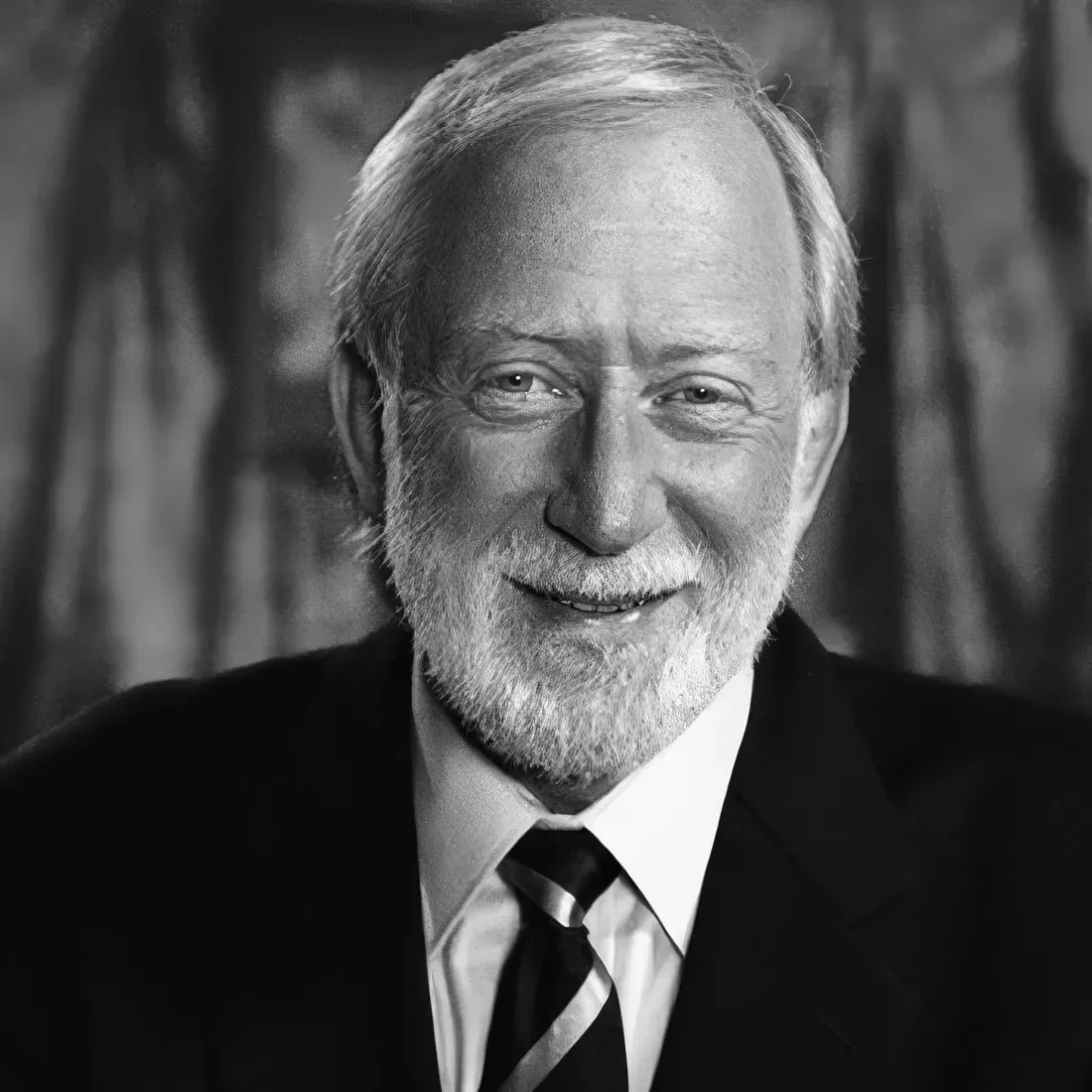
In brief — Post-surgical pain peaks 5-6 hours after the procedure, when anesthesia wears off. The NSAID combination (ibuprofen + paracetamol) is more effective than opioids, with stepped protocols from mild to severe pain.
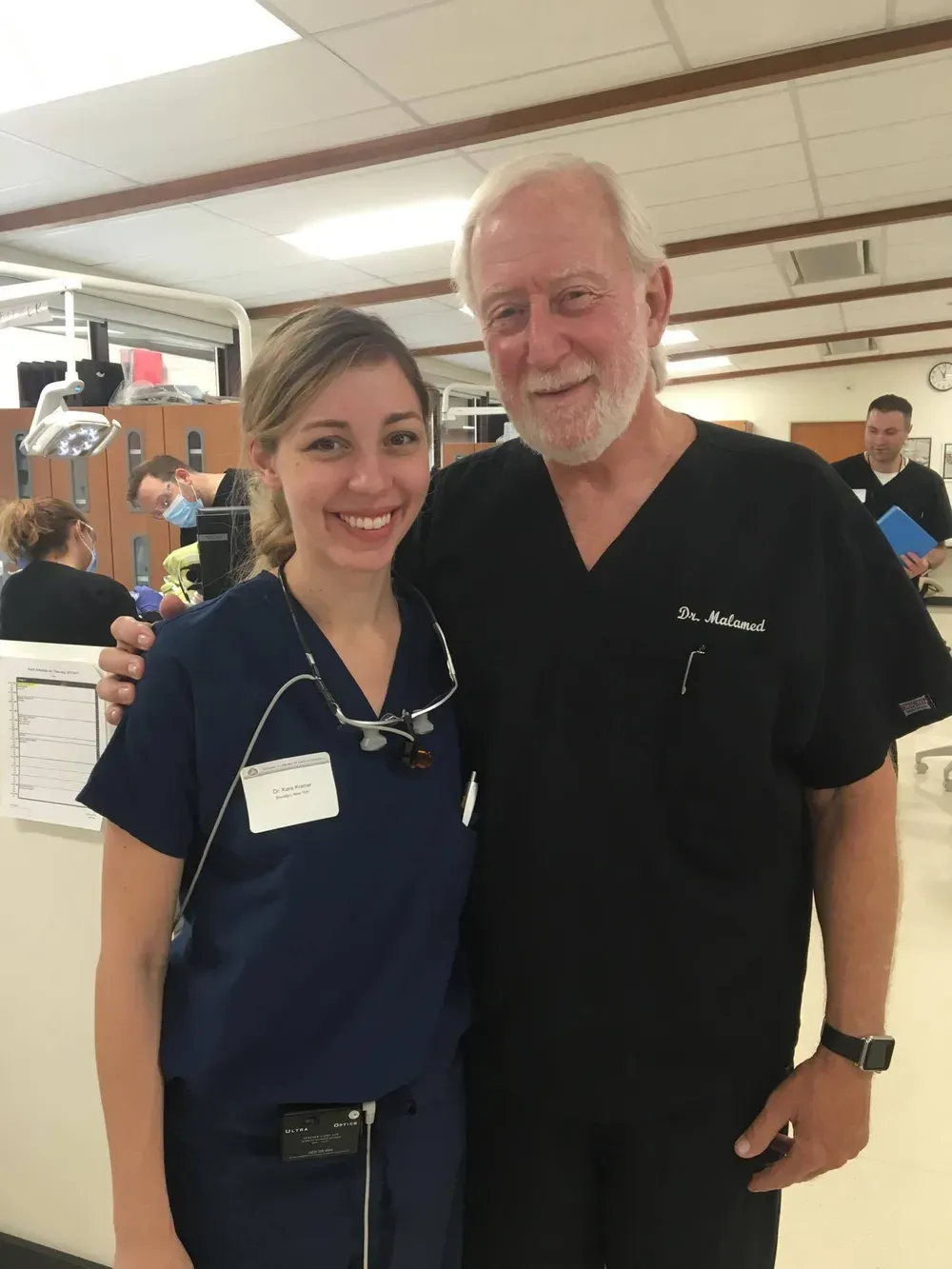
Stanley Malamed, dentist and emeritus anesthesiologist at USC, published in Dental Traumatology a review that every oral and implant surgeon should stop and read on the management of post-operative pain.
[On the left, Malamed, born 1944, with a student during a recent course. Source: Wikipedia]
Not because it contains startling revelations, but because it confirms what clinical experience has always taught: the most intense pain shows up about five or six hours after the procedure ends, when local anesthesia fades and the patient is left alone with the consequences of our surgical choices.
Reading this beautiful paper, I asked myself: “why not help the colleagues who perform more invasive surgery than mine?”
So here are the key points from the great Malamed’s article.
The First Day
Malamed describes with scientific precision what happens in the days following third-molar extractions, implant placement, periodontal and endodontic surgery.
The peak of pain arrives on the first post-operative day. The greatest consumption of analgesics concentrates in the first forty-eight or seventy-two hours. These data come from the third-molar extraction model, the most studied for assessing post-surgical pain in dentistry.
But can we apply them to implantology? Certainly, with one fundamental distinction: not all implant procedures inflict the same tissue trauma.
There are techniques that respect bone, that expand it instead of removing it, that work with biology instead of imposing an ideal geometry more theoretical than practical. These conservative techniques — the ones I practice every day in ridge splitting and in bone expansion with the Bonebenders system — dramatically reduce post-operative inflammation and, as a result, pain.
My patients rarely need strong analgesics, because the surgery itself was designed to minimize trauma.
But I recognize this is not the reality of most contemporary implant surgery, where extensive grafts and flaps are still the norm. For those cases, understanding the pharmacology of pain becomes essential.
The Opioid Mistake
The question of opioids in dentistry is one of the most glaring failures of recent medical training. Malamed cites alarming figures: in the United States, dentists prescribe more opioids to patients under eighteen than any other medical specialty.
A 2021 study revealed that 84% of surveyed US dentists believed NSAID-paracetamol combinations were as effective as opioids, yet 43% kept prescribing opioids routinely.
Worse still, American dentists reportedly prescribe opioids in quantities and durations that favor abuse and dependence. And often, these are very young patients, because most of that analgesic therapy relates to third-molar extractions.
The numbers are clear. The NNT, number needed to treat, measures how many patients must take a drug for one of them to obtain at least 50% pain reduction versus placebo. Ibuprofen 400 mg has an NNT of 2.4. Ketoprofen 100 mg reaches 1.6. Opioids? Hydrocodone has an NNT of 3, oxycodone 4.6, codeine (often combined with paracetamol) 16.7.
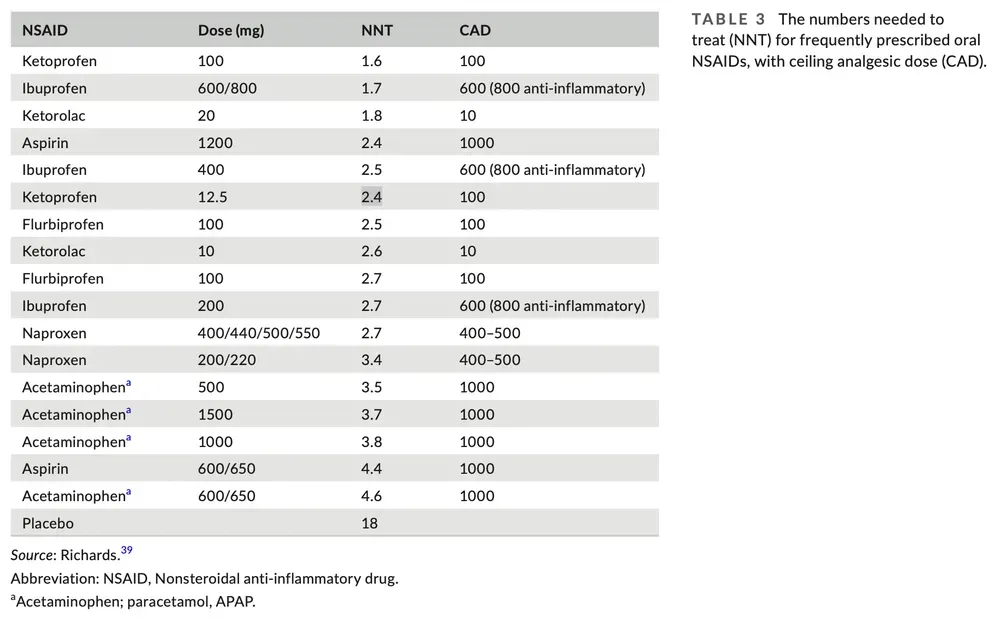
Placebo has an NNT of 18. Codeine 60 mg, its maximum effective dose, is practically indistinguishable from placebo.
But It Gets Worse
Opioids do not relieve pain. Malamed says it bluntly: unlike NSAIDs, opioids raise the reaction threshold to pain, dampen the emotional response, separate pain from suffering — but do not eliminate the nociceptive perception itself.
A patient on opioids still feels the pain; they simply care less about it. Meanwhile, a single 15 mg oxycodone tablet reduces minute ventilation by 28%.
If the patient drinks alcohol, the reduction climbs to 47%. Respiratory depression, dependence, and an analgesic efficacy inferior to NSAIDs. Why do we keep prescribing them?
And this is no longer just one great clinician’s opinion. In 2024 a panel from the American Dental Association, together with the Universities of Pittsburgh and Pennsylvania, published in the Journal of the American Dental Association the first evidence-based clinical practice guideline for acute dental pain (Carrasco-Labra and colleagues). The conclusion leaves no room for maneuver: NSAIDs, alone or combined with paracetamol, are first-line therapy; opioids are reserved for cases where NSAIDs are insufficient or contraindicated. The panel writes a sentence that should hang in every office: avoid the just-in-case prescribing of opioids, with extreme caution in adolescents and young adults. Then, of course, every patient is a world unto themselves — immunity, metabolism and concurrent medications shift the pain response and the therapeutic choice. But the course is set.
The Superiority of NSAIDs
Non-steroidal anti-inflammatory drugs are the most effective analgesics for post-surgical dental pain.
Malamed cites a 2023 systematic network meta-analysis that identifies the most effective combinations: ibuprofen 200-400 mg plus paracetamol 500-1000 mg, paracetamol 650 mg plus oxycodone 10 mg, ibuprofen 400 mg plus naproxen 400-440 mg.
But note: oxycodone 5 mg, codeine 60 mg, tramadol 37.5 mg combined with paracetamol 325 mg were no better than placebo.
Ibuprofen 400 mg has an NNT of 2.4 across more than five thousand patients in the studies. The ibuprofen 400 mg plus oxycodone 5 mg combination reaches an NNT of 2.3.
There is, though, a practical detail recent research has sharpened, and it is worth more than many sophisticated prescriptions: it is not only what you give, but how you give it. A 2025 controlled trial in Scientific Reports (Gaballah and colleagues) compared, after lower third-molar extraction, ibuprofen 400 mg and paracetamol 500 mg taken together every eight hours against the same drugs taken alternately every four hours. In the alternating group, 85% of patients reported adequate pain control, versus barely more than half in the group taking them concurrently. Staggering the two agents keeps analgesic coverage more continuous, without gaps. An almost free trick that changes the day of the person you just operated on.
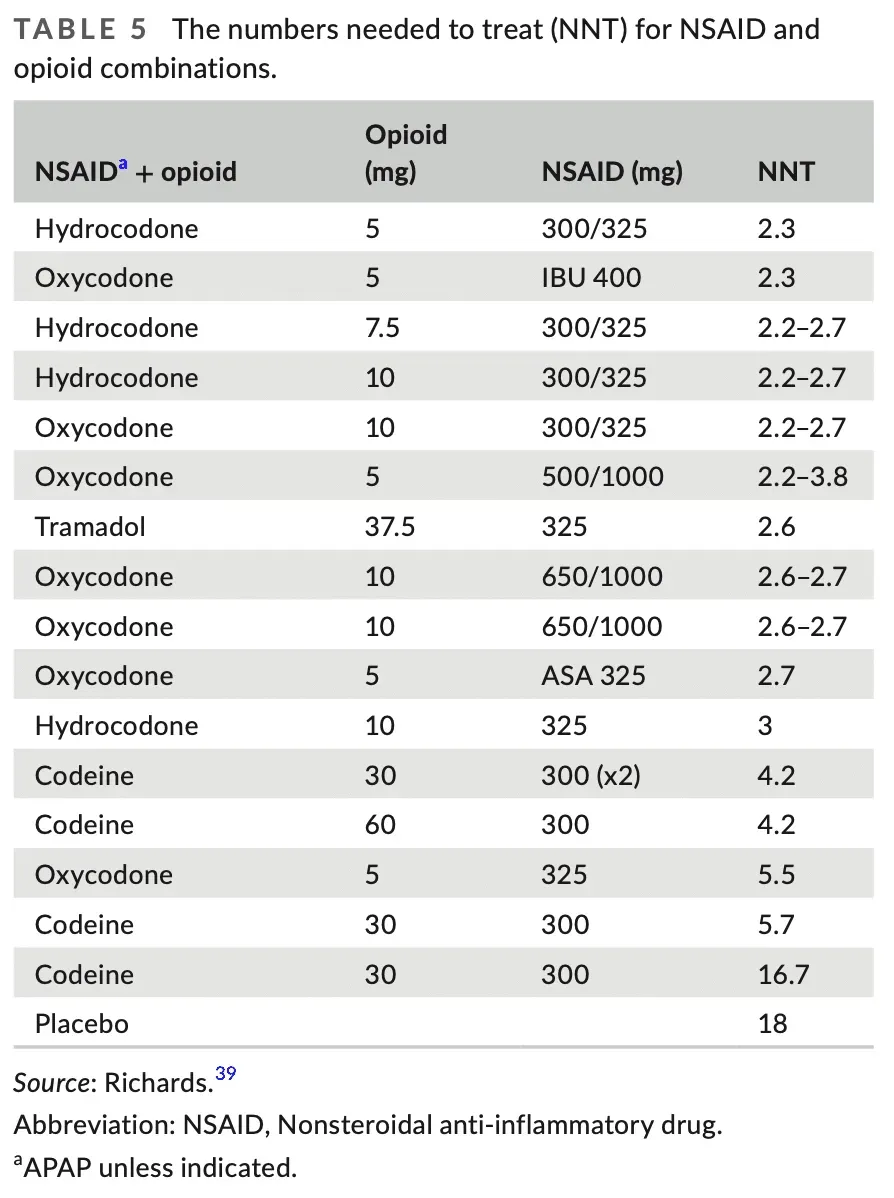
The improvement is marginal, while the opioid’s adverse effects remain unchanged.
Does it make sense to add a drug that depresses breathing, causes dependence and offers such a modest benefit?
The protocol suggested by Moore and Hersh, cited by Malamed, uses a stepped approach based on expected pain intensity.
For mild pain, ibuprofen 200-400 mg every four to six hours as needed.
For moderate pain, ibuprofen 400-600 mg every six hours at fixed intervals for the first twenty-four hours, then as needed.
For severe pain, ibuprofen 400-600 mg plus paracetamol 500 mg every six hours at fixed intervals, then as needed.
Only for extreme pain can hydrocodone 10 mg be considered, and only for twenty-four to forty-eight hours before returning to the NSAID-paracetamol combination alone.
The Role of Bupivacaine
A fundamental point is that pain management begins before the patient feels it.
Malamed recommends the pre-operative administration of an NSAID at anti-inflammatory dose: ibuprofen 800 mg or naproxen 500 mg one hour before surgery.
Studies show that establishing a therapeutic drug level before surgery reduces tissue inflammation and post-operative discomfort without increasing bleeding.
A Cochrane review of thirty-six studies and two thousand patients confirmed a modest but significant pain reduction in the first six hours, with no serious adverse effects.
And here the evidence gets precise for exactly those of us who work on periodontium and implants. A 2025 systematic review with meta-analysis, published in the Journal of Clinical Periodontology by Gousias and colleagues, gathered eighteen studies on over a thousand patients undergoing periodontal, mucogingival and implant surgery — not third molars, but our procedures. NSAIDs, paracetamol or corticosteroids given before the incision reduce pain in a clinically relevant way, peaking around three hours and staying measurable up to eight. That is precisely the window in which anesthesia fades and the patient is left alone. Anticipating inflammation means governing it at the root — the same inflammation that later decides how the wound heals. Pain is prevented, not chased.
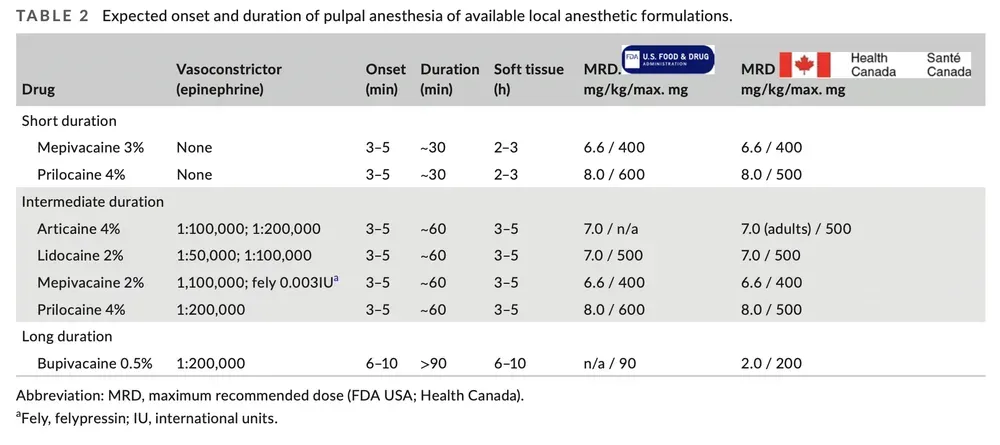
During surgery, articaine, lidocaine, mepivacaine or prilocaine with a vasoconstrictor guarantee effective intraoperative anesthesia.
But at the conclusion of the surgical procedure, when tissue trauma has been inflicted and inflammation has already begun, bupivacaine with adrenaline given via nerve block can extend the pain-free period up to twelve hours. Some patients report mild or no pain even eight hours after third-molar extraction, followed by residual analgesia without numbness but without pain.
Bupivacaine has the slowest onset among available local anesthetics, six to ten minutes, which is why it is rarely used as the primary anesthetic.
But its prolonged duration — over ninety minutes for pulpal anesthesia and six to ten hours for soft tissue — makes it ideal for post-operative control.
Naturally, some patients may object to prolonged numbness, and the risk of self-inflicted injuries from biting the lip or tongue increases.
But for an informed patient, aware of the benefits, bupivacaine is an excellent option.
And the molecule is evolving. Extended-release liposomal formulations now exist: the phase 3 INNOVATE study (Lieblich and Danesi, Anesthesia Progress 2024), in patients undergoing bilateral third-molar extraction, showed lower pain scores than placebo throughout the course — a clear result in the per-protocol analysis, more blurred in the overall one because of protocol violations. It is no magic wand, and the authors admit as much honestly. But the direction is clear: stretching the pain-free hours quiets the hunger for analgesics in the first, decisive forty-eight hours.
Ibuprofen, paracetamol or ketoprofen, if you are the patient
So far I’ve been talking to colleagues. If you are the one having a tooth out or an implant placed tomorrow, and the medicine cabinet holds ibuprofen, paracetamol and ketoprofen, this is the rule.
Ibuprofen and ketoprofen are two anti-inflammatories of the same family and you take only one of them: together they don’t control pain any better and they double the load on stomach and kidneys. Paracetamol (acetaminophen) is a different molecule, and that one does add to the NSAID: ibuprofen 400 mg plus paracetamol 500-1000 mg is the combination with the best NNT in the table, 2.3. Taken at alternating times, one every four hours, the cover has no gaps.
Three warnings. The anti-inflammatory goes on a full stomach. Anyone with gastritis or an ulcer, with kidneys that don’t work well, or on anticoagulants or antiplatelets takes paracetamol alone and asks the doctor first; for these cases there is also the check of interactions with the drugs you already take. And codeine combinations add nothing: at 60 mg codeine has an NNT of 16.7, almost that of placebo.
Take the first dose before the anaesthesia wears off, in the first hours after surgery, and for the first twenty-four hours on a fixed schedule, without waiting for the pain to arrive. From day two, as needed. The rest of what awaits you, day by day, is in the article on the first 48 hours after an extraction.
Conservative Techniques, Fewer Drugs
All this pharmacological arsenal becomes less necessary when the surgical technique respects tissue. Osteo-mucosal expansion, custom regeneration without massive grafts, produce controlled inflammation. Trauma is minimal, pain consequently reduced.
The technique itself was designed to minimize biological damage.
A Rational Protocol
Malamed concludes with an integrated protocol for post-surgical and post-traumatic pain management.
- Pre-operative NSAID at anti-inflammatory dose.
- Effective intraoperative anesthesia with the usual intermediate-duration anesthetics.
- Bupivacaine at the end of surgery to extend the pain-free period.
- Post-operative analgesics stepped by expected intensity: ibuprofen for mild pain, ibuprofen plus paracetamol for moderate, opioids rarely for severe and only for twenty-four to forty-eight hours.
- Finally, a phone call from the surgeon to the patient that same evening or the next day. An important detail: that call is not courtesy, it is therapeutic alliance, and it is worth as much as a drug.
This protocol works. And it works best when the surgery was conservative.
References
- Malamed SF. Pain management following dental trauma and surgical procedures. Dent Traumatol. 2023;39(4):295-303. doi:10.1111/edt.12840 · PMID: 36961318
- Carrasco-Labra A, Polk DE, Urquhart O, et al. Evidence-based clinical practice guideline for the pharmacologic management of acute dental pain in adolescents, adults, and older adults. J Am Dent Assoc. 2024;155(2):102-117.e9. doi:10.1016/j.adaj.2023.10.009 · PMID: 38325969
- Gousias C, Alsuwaiyan Z, Fial A, Han S, Tatakis DN, Kofina V. Pre-emptive analgesia for periodontal and implant-related surgery: a systematic review and meta-analysis. J Clin Periodontol. 2025;52(8):1167-1195. doi:10.1111/jcpe.14157 · PMID: 40342059
- Gaballah K, Eldohaji T, El Tannir M, Shaban R, Habib R, Ali K. Pain control following impacted mandibular third molar surgery: a comparison of the effectiveness of two different protocols. Sci Rep. 2025;15(1):11519. doi:10.1038/s41598-025-89744-0 · PMID: 40181005
- Lieblich SE, Danesi H. Liposomal bupivacaine use in third molar impaction surgery: INNOVATE study. Anesth Prog. 2024;71(4):199-207. doi:10.2344/333161 · PMID: 39711449
FAQ
When does pain peak after oral surgery?
Why aren't opioids the best choice for post-surgical dental pain?
What is the most effective drug combination for post-surgical pain?
What does bupivacaine do and when is it given?
After an extraction or an implant, ibuprofen, paracetamol or ketoprofen?
Are antibiotics necessary after oral surgery?
Cite this article
Ready for theses, slides and papers. If you cite it on a web page, make the URL a link so readers can reach the source.
Bruschi E. How to cancel pain after oral surgery [Internet]. Frosinone (Italy): Bonebenders; 2025 [updated 2026 Oct 16; cited 2026 Oct 25]. Available from: https://bonebenders.com/en/blog/manage-oral-surgery-pain-without-opioids/ Bruschi, E. (2025, November 13). How to cancel pain after oral surgery. Bonebenders. https://bonebenders.com/en/blog/manage-oral-surgery-pain-without-opioids/
@misc{bruschi2025manage,
  author       = {Bruschi, Ernesto},
  title        = {How to cancel pain after oral surgery},
  year         = {2025},
  month        = nov,
  howpublished = {Bonebenders},
  url          = {https://bonebenders.com/en/blog/manage-oral-surgery-pain-without-opioids/},
  note         = {Accessed 2026-10-25}
} Go deeper
Espansione crestale (split crest) →Allargare la cresta senza trapianto — tecnica ERE e bonebending
Need a professional opinion?
Book an appointment at Dr. Bruschi's practice in Frosinone. First visit includes full diagnosis and personalised treatment plan.
Stai valutando un impianto dentale?
Ti hanno detto che non hai abbastanza osso, o ti hanno proposto un’arcata fissa? Ho scritto una guida di dieci pagine: le strade possibili, gli esami che servono e le dieci domande da fare prima di firmare.
Ricevi la guidaStay Updated
New articles on periodontology, implantology and oral surgery — delivered to your inbox.
Comments
Loading comments...
Leave a comment