30 Years of the Link Between Teeth and General Health
Leggi in Italiano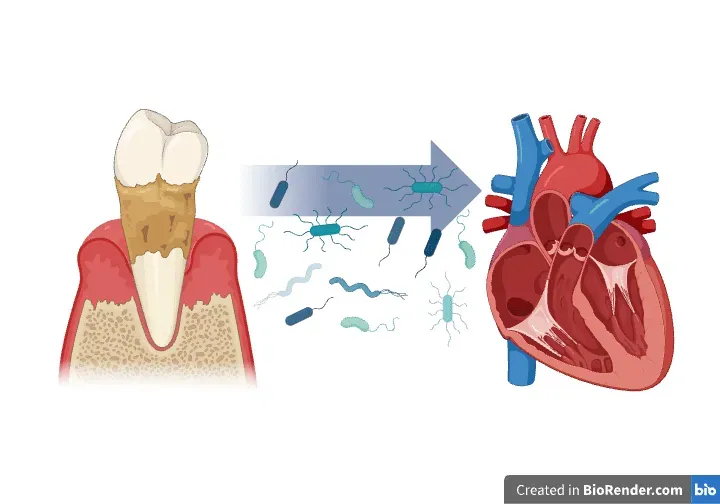
In brief — Periodontal disease is as strong a cardiovascular risk factor as smoking. The 30-year Stockholm Study shows oral bacteria reaching the heart, brain, and lungs, with an odds ratio of 1.79 for mortality. Dental prevention is general prevention.
For thirty years I watched a pattern that unsettled me.
I have always been trained to study every aspect of my patients, and to recognise periodontal disease in particular — that is the direction my university and postgraduate studies gave me.
At first I did it less systematically. Then I learned to be meticulous about it.
Early on, I noticed a connection that almost nobody talked about at university.
Patients with severe periodontal disease seemed to show cardiovascular disease, diabetes, and other conditions more often too.
But one dentist’s private statistics carry little scientific weight. So I did the thing I do best: I started reading.
Searching the scientific literature databases, I found thousands of articles linking various systemic diseases to periodontitis.
One article in particular struck me.
The Study That Changed the Perspective
In 1985, at the Karolinska Institutet in Stockholm, professor Per-Östen Söder began a study that would become the world’s most important database on the relationship between oral health and general health.

It is the so-called Stockholm Study, which has followed — and keeps following — 1,676 adults aged thirty to forty for over thirty years, meticulously recording each subject’s dental condition and the evolution of their general health up to death.
The results are unambiguous. Patients with periodontitis showed significantly more severe atherosclerosis than the periodontally healthy population. The most striking finding concerned mortality: a high plaque index was associated with an odds ratio (OR) of 1.79 for death, while gingival inflammation reached an OR of 1.29 — almost as high as cigarette smoking, at OR 1.32.
Periodontal disease is, therefore, as significant a risk factor as the best-known cardiovascular killers.
More recent data confirm the trajectory, with a few caveats worth reporting in the interest of honesty. Wu and colleagues, in a 2024 meta-analysis on patients with chronic kidney disease, found that periodontitis — defined through clinical attachment loss — is associated with a significantly higher risk of cardiovascular mortality (HR 1.57). Not every subgroup confirms the same strength of association, though: another review from the same year, on end-stage renal disease patients, found no significant association with all-cause mortality. The relationship, in other words, stays solid at the general-population level but weakens in more compromised clinical pictures, where other factors (dialysis, multiple comorbidities) carry more weight — a reminder that also applies to patients who are already fragile from an immune and metabolic standpoint.
Looking for Books on the Subject
I also looked for textbooks on the topic.
One that immediately caught my eye was by a US cardiologist, Thomas E. Levy.
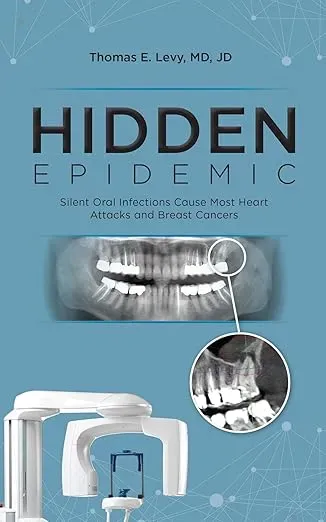
As the cover itself suggests, the author cites numerous studies linking heart disease and breast cancer to dental and periodontal infections.
Regarding breast cancer, Levy argues there is a clear link with root-canal-treated teeth (according to the author, even ones that appear perfectly done with no sign of secondary infection), whose toxins would travel through the lymphatic system.
The book is very interesting and I recommend it to anyone who wants to dig deeper into these subjects. I think some of the arguments are probably pushed too hard toward a single conclusion, but it remains a good read.
The fact is, we are always talking about diseases that, in all likelihood, have more than one cause.
In 2023 the controversial film “The Root Cause” came out on Netflix, later pulled after protests from numerous dental associations and US universities. The film, too, reaches conclusions that are too sharp, demonising dental procedures that are perfectly safe when performed correctly.
But what happens when those same procedures are done poorly and lead to silent, chronic infections?
The Birth of My Popular-Science Book
Pushed by my tireless friend Giulio Cesare Leghissa, to whom I had shared my thinking on the subject, I selected the most recent and significant scientific articles documenting these pathological relationships and condensed the results into my book “Killer 32,” published in 2023.
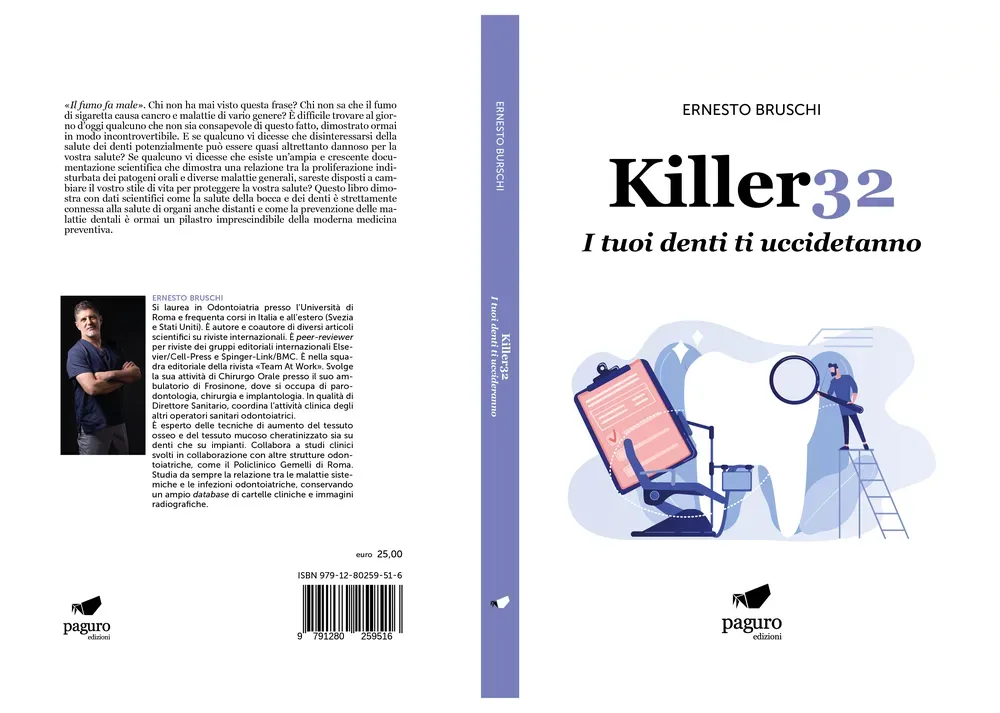
The provocative title is meant to spark the reader’s curiosity.
The 32 teeth host over 700 bacterial species that, left to proliferate unchecked, produce silent infections with devastating impact on body and mind.
The word “silent” is crucial. Dental and gum infections are often free of obvious symptoms, and that is exactly what makes them so insidious.
The idea grew out of our SIOD union, which aims to raise awareness among institutions, dentists, dental hygienists, and patients about the importance of dental prevention for preventing systemic disease as well.
The book did very well, with generous and gratifying reviews. It is written simply and without jargon, precisely to make it easy for anyone to understand.
It would be good if the officials responsible for public health in our government ordered a copy too.
Visit the Killer32 page here.
The Wave of Recent Studies
The most recent bibliometric analysis, published in January 2025 in Periodontology 2000, identified 6,106 records in the Web of Science database over 1989–2024, of which 1,519 articles met the inclusion criteria for studying the relationship between periodontitis and systemic disease.
One notable figure: 46.73% of the literature on this topic was published in the last five years, with publications peaking in 2023 at 180 articles.
The Awakening of the Scientific Community
The fragmentation of modern medicine gets in the way of seeing the whole picture.
The dentist treats teeth, the cardiologist the heart, the oncologist tumours — but few look at the patient as an integrated system where each part influences the others.
Something is changing today. Some scientific societies and practitioners are finally raising these issues more forcefully. About time.
Research keeps producing evidence, databases keep growing, longitudinal studies keep confirming the links. This is no longer empirical intuition — it is statistically significant data that no one can ignore any longer.
The Mechanism of Silent Inflammation
The Swedish study suggested that the link between periodontitis and atherosclerosis lay in increased leukotriene formation, lipid molecules that contribute to inflammatory and immune processes.
Leukotriene production comes together with the release of histamine, triggering pathogenic changes in the inner wall of blood vessels. The build-up of lipids and minerals leads to the formation of atheromatous plaques — the degenerations of arterial walls that cause loss of elasticity, vascular ruptures, thrombosis, and embolism.
Periodontitis also increases matrix metalloproteinases, proteins involved in extracellular matrix degradation in both normal physiology and pathological and tumour processes. MMPs contribute to atheroma pathogenesis and explain why oral infections are linked to both cardiovascular disease and chronic, asymptomatic inflammation.
The good news is that this inflammation is at least partly reversible. Meng and colleagues, in a 2024 meta-analysis of twenty-one randomized trials, showed that non-surgical periodontal therapy alone significantly reduces interleukin-6 and systolic blood pressure, with weaker but still present evidence for C-reactive protein. Scaling and root planing — the basic cleaning any hygienist performs in the chair — extinguish part of the inflammatory fire that then reaches distant organs such as the brain via the systemic circulation.
From the Heart to Tumours
The Stockholm Study did not stop at cardiovascular disease. Söder’s group also studied the role of oral infections in breast cancer, finding that incidence rises with the severity of periodontal disease.
When periodontitis is severe and causes loss of the lower molars, incidence reaches 5.5% of subjects, versus 1% in the periodontally healthy.
Clinical markers of poor oral health are associated with increased cancer mortality. A high plaque index correlates with an OR of 1.79 for death, and gingival inflammation reaches an OR of 1.29. Estimates indicate that infection-driven inflammation is involved in the pathogenesis of roughly 15-20% of human cancers. The Swedish cohort analysis showed that young people with periodontitis and missing molars have an increased risk of premature death from cancers and diseases of the circulatory and digestive systems.
Söder’s observation on breast cancer did not stay isolated. Duan and colleagues, in a 2026 meta-analysis of 26 cohort studies drawn from nearly 9,000 screened articles, confirmed the association between periodontal disease and multiple cancer types: pancreatic (RR 1.26), bladder (RR 1.21), esophageal (RR 1.34), prostate (RR 1.17), colorectal (RR 1.16), gastric (RR 1.16), and breast (RR 1.11). When periodontitis was self-reported rather than clinically diagnosed, the risk estimates climbed even higher for nearly every cancer site — a detail suggesting that a patient’s subjective sense of their own oral health can mask an already advanced inflammatory picture.
The Paradoxical Luck of Those Who Know
There is an unsettling paradox in this story.
People who know they have dental problems have an advantage. They get checked often, undergo periodic hygiene maintenance, and rarely develop diseases with a dental co-cause. Studies show reduced mortality among those who take care of their dental health.
Those most at risk are the ones who think they are fine.
Their teeth look normal, maybe a drop of blood on the toothbrush, mild bad breath they blame on poor digestion.
Meanwhile the pathogenic bacterial flora keeps working, reaching distant organs — heart, brain, gut — directly through the vessels or indirectly through membrane products and metabolites. There are biological windows where the bill comes due faster — pregnancy is one of them, and so is the crossroads between periodontitis and metabolic disease, where each feeds the other.
The mouth is not separate from the body.
It is the entry gate to a microbial ecosystem that can be friend or foe. Underestimating oral health means underestimating general health. The thirty-two teeth are not just chewing tools. They are sentinels that, if neglected, can turn into silent killers.
Science has proven it. Now it is up to us — professionals and patients — to act accordingly.
Ask your dentist for a thorough periodontal check-up.
References
- Meurman JH, Söder B. The Stockholm Study: over 30 years’ observation of the effect of oral infections on systemic health. Dent J (Basel). 2022;10(4):68. doi:10.3390/dj10040068 · PMID 35448062
- Duan C, Wan W, Tureke M, Lin D, Zhu J, Feng L, Wu Z. Periodontal disease and incidence of cancers: a systematic review and meta-analysis of cohort studies. Int Dent J. 2026;76(3):109527. doi:10.1016/j.identj.2026.109527 · PMID 41889038
- Meng R, Xu J, Fan C, Liao H, Wu Z, Zeng Q. Effect of non-surgical periodontal therapy on risk markers of cardiovascular disease: a systematic review and meta-analysis. BMC Oral Health. 2024;24(1):692. doi:10.1186/s12903-024-04433-0 · PMID 38877442
- Wu H, Wang S, Wei Z. Periodontitis and risk of mortality in patients with chronic kidney disease: a systematic review with meta-analysis. J Periodontal Res. 2024;59(5):868-876. doi:10.1111/jre.13255 · PMID 38501242
- Chen H, Li J. Association between periodontitis and its treatment on mortality rates of end-stage renal disease: a systematic review and meta-analysis. Med Oral Patol Oral Cir Bucal. 2024;29(3):e334-e342. doi:10.4317/medoral.26307 · PMID 38150604
Go deeper
Espansione crestale (split crest) →Allargare la cresta senza trapianto — tecnica ERE e bonebending
Need a professional opinion?
Book an appointment at Dr. Bruschi's practice in Frosinone. First visit includes full diagnosis and personalised treatment plan.
Stai valutando un impianto dentale?
Ti hanno detto che non hai abbastanza osso, o ti hanno proposto un’arcata fissa? Ho scritto una guida di dieci pagine: le strade possibili, gli esami che servono e le dieci domande da fare prima di firmare.
Ricevi la guidaStay Updated
New articles on periodontology, implantology and oral surgery — delivered to your inbox.
Comments
Loading comments...
Leave a comment