Why Dental Implants Fail: Immunity, Metabolism, and Medications
Leggi in Italiano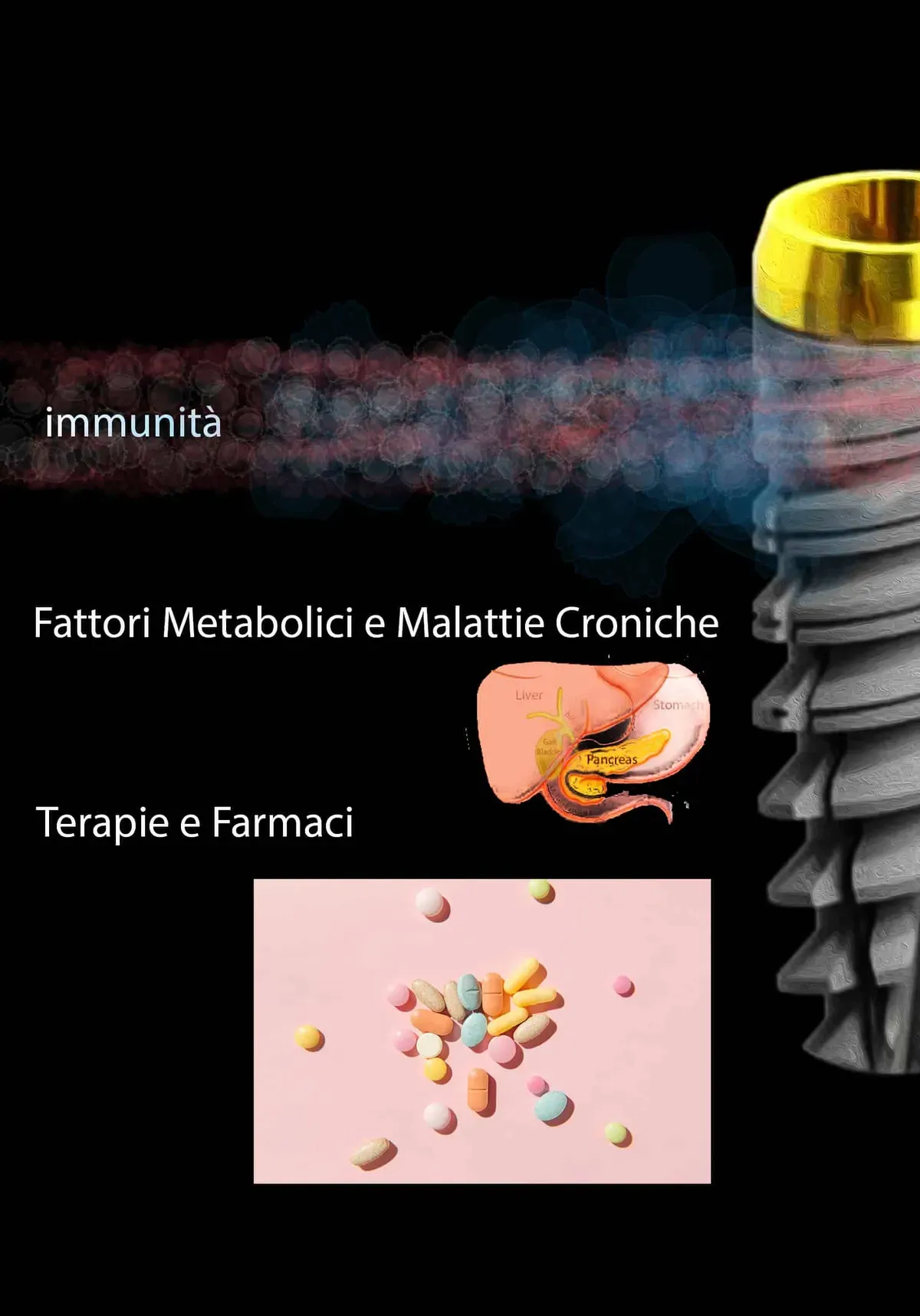
In brief — Implant failure is rare (<2%) but linked to pro-inflammatory macrophages, vitamin D deficiency, smoking, uncontrolled diabetes, SSRIs, and radiotherapy. Preoperative screening and conservative techniques sharply cut the biological risk of failure.
Dental implant failure is a rare phenomenon — but it exists.
Implants are a top-tier treatment that works exceptionally well and lets us do remarkable things. Still, as with any therapy, risk factors exist that can tip the odds unfavorably.
This review won’t cover surgical placement errors and other technical mistakes that contribute to failures. I’ve dealt with the biomechanical consequences of implant malpositioning in a dedicated article.
I want to be clear that a small share of failures always exists. Anyone who claims they’ve never had one either isn’t being honest, or hasn’t been operating long.
And it isn’t “rejection” — dental implant rejection, in the immunological sense of the word, doesn’t exist. What follows is a multifactorial biological process that, in rare cases, doesn’t complete itself.
For patients: the rare failure is temporary and not dangerous at all. Your dentist will resolve it on the second attempt.
Cellular and Immune Mechanisms
Macrophage polarization (M1/M2): excessive activation of pro-inflammatory M1 macrophages over pro-regenerative M2 macrophages can create an unfavorable inflammatory environment, hindering healing and favoring fibrous tissue over bone — the same scenario I describe in the article on fibrointegration — leading to early failure of osseointegration. The competition between myofibroblasts and osteoblasts is one of the key mechanisms in this process.
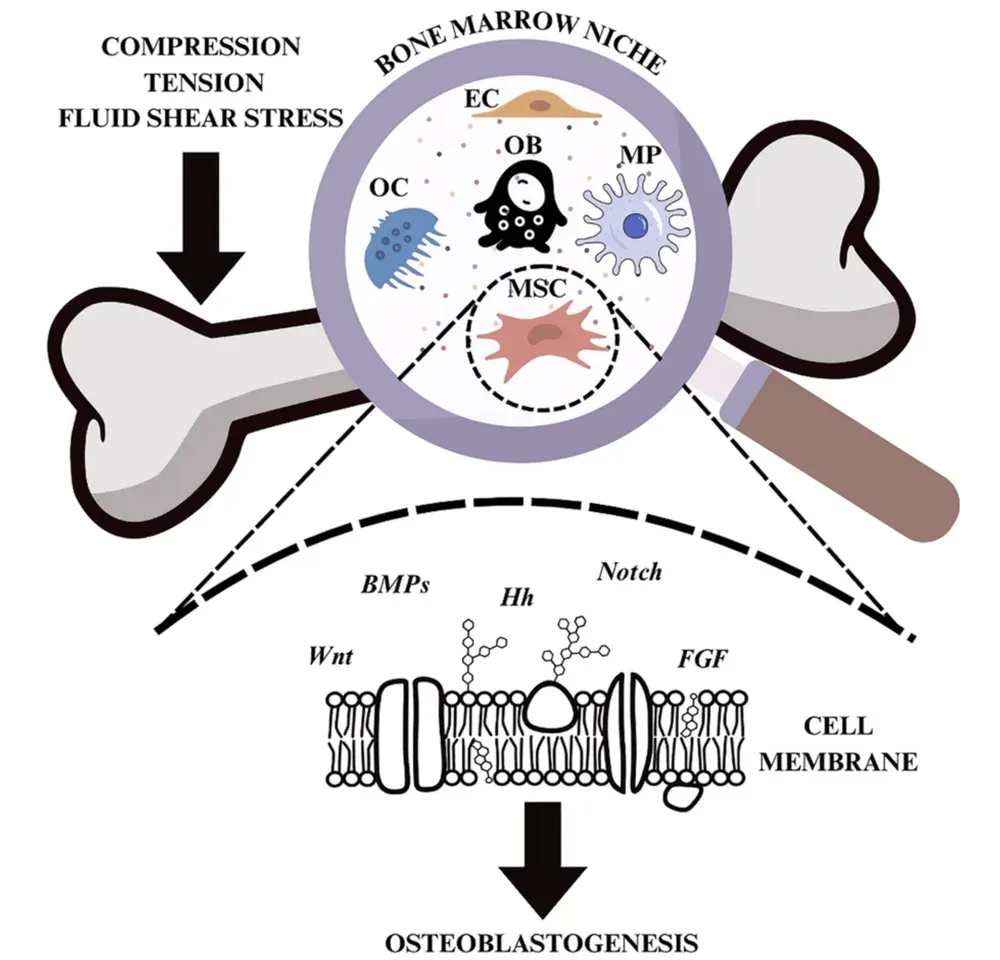
Dysfunction of bone-marrow mesenchymal stem cells (MSCs), tied to aging, reduces osteogenic capacity and favors adipogenesis, compromising osseointegration through depletion of osteogenic cells. This process is closely connected to the natural regenerative capacity of tissue, which declines with age.
Understanding the osteocyte connectome helps explain how bone cells communicate during the remodeling that occurs during healing.
Metabolic Factors and Chronic Disease
Metabolic factors such as smoking, metabolic syndrome, and a poor diet alter bone metabolism and raise the risk of failure.
Smoking, in particular, impairs microcirculation and the local immune response, reducing the bone tissue’s ability to respond to the implant stimulus. A 2026 systematic review of 44 studies (Calciolari et al., Clinical Oral Implants Research) confirms this with precise figures: implant survival drops in smokers (OR 0.40; 95% CI 0.27-0.61) and marginal bone loss increases by 0.64 mm, alongside a higher incidence of peri-implantitis.
Less studied, but clearly emerging from a 2026 meta-analysis (Boroomand et al., Oral and Maxillofacial Surgery), is the role of alcohol: overall consumption doesn’t shift the risk, but heavy drinking nearly triples it (OR 2.78; 95% CI 2.08-3.91). Curiously, light-to-moderate consumption was even associated with reduced risk (OR 0.40) — a finding to read with caution, since the available studies remain observational.
Diabetes, when poorly controlled, compromises healing and bone regeneration, though its direct impact on implant failure remains debated.
Chronic hyperglycemia impairs neutrophil and macrophage function, slowing the early phases of osseointegration and raising the risk of peri-implant infections.
Osteoporosis itself doesn’t seem to significantly raise failure risk, but bisphosphonate therapy can cause osteonecrosis of the jaw. I covered this topic in a dedicated article on osteoporosis and osseointegration.
Low vitamin D levels have similar effects, negatively affecting bone mineralization and immune response. Severe vitamin D3 deficiency is associated with a significantly higher rate of implant failure compared to patients with sufficient levels.
The quality of the recipient bone plays a decisive role.
The new alveolar bone classification allows for more accurate planning and better prediction of the implant site’s biological behavior.
Therapies and Medications
The use of antidepressants, particularly selective serotonin reuptake inhibitors (SSRIs), is associated with an increased risk of implant failure.
Serotonin plays an important role in bone metabolism: serotonergic receptors are present on osteoblasts and osteoclasts, and disruption of their balance can compromise the bone remodeling needed for osseointegration.
A 2024 meta-analysis of 11 clinical studies (Harutyunyan et al., The International Journal of Oral & Maxillofacial Implants) quantifies the risk precisely: RR 2.44 at both the patient level and the implant level, with sertraline flagged as the SSRI most implicated.
Radiotherapy and immunosuppression raise the risk of complications and implant loss. Irradiated bone has compromised vascularization and reduced regenerative capacity, making osseointegration harder and raising the risk of osteonecrosis.
According to some authors, drugs such as proton pump inhibitors and statins may negatively affect bone metabolism. PPIs, by reducing gastric acidity, can interfere with calcium absorption, while statins have mixed effects: some studies suggest a protective effect on bone, others point to potential risks.
The Role of Primary Stability
Primary stability remains a crucial factor for implant success. Still, as I’ve argued elsewhere, the concept of primary stability itself deserves a critical second look.
It isn’t just a mechanical matter: it’s the biological starting point from which bone begins the remodeling process that will lead to true osseointegration.
In thin-ridge cases, conservative techniques such as ridge expansion (ERE) achieve adequate stability while preserving the patient’s own bone stock, with success rates comparable to traditional additive techniques.
What the Evidence Actually Says
A 2025 umbrella review (Giok et al., The Journal of Prosthetic Dentistry) recalculated existing meta-analyses across 35 associations using the GRADE method. The result tempers some of the certainty: smoking remains the only factor with “highly suggestive” evidence; SSRIs, proton pump inhibitors, and Crohn’s disease only reach “suggestive” evidence. Honestly, none of the associations reach the “convincing” level. That’s the difference between a proven risk factor and a probable one — worth keeping in mind clinically before alarming a patient over an antidepressant or a gastric-acid reducer.
None of this takes away from the substance: implants remain a decades-long story, not a months-long one, and biological risk is managed upstream, with the right screening.
Conclusions
Early implant failure is a multifactorial phenomenon in which immunological, metabolic, and pharmacological aspects converge. Understanding these mechanisms makes it possible to identify at-risk patients and optimize biological conditions before surgery.
The most prudent clinical approach involves a systemic patient evaluation, including vitamin D screening, glycemic control in diabetics, smoking cessation, and attention to ongoing drug therapies.
Failure, in the rare cases it happens, is not a final defeat: it’s a manageable event that, in the vast majority of cases, resolves successfully on the second attempt.
References
Amengual-Peñafiel, L., Córdova, L., Jara-Sepúlveda, C., Brañes-Aroca, M., Marchesani-Carrasco, F., & Cartes-Velásquez, R. (2021). Osteoimmunology drives dental implant osseointegration: A new paradigm for implant dentistry. The Japanese Dental Science Review, 57, 12 - 19. https://doi.org/10.1016/j.jdsr.2021.01.001
Dalle Carbonare, L., Cominacini, M., Trabetti, E. et al. The bone microenvironment: new insights into the role of stem cells and cell communication in bone regeneration. Stem Cell Res Ther 16, 169 (2025). https://doi.org/10.1186/s13287-025-04288-4
Chen, H., Liu, N., Xu, X., Qu, X., & Lu, E. (2013). Smoking, Radiotherapy, Diabetes and Osteoporosis as Risk Factors for Dental Implant Failure: A Meta-Analysis. PLoS ONE, 8. https://doi.org/10.1371/journal.pone.0071955
Schliephake, H. (2022). The role of systemic diseases and local conditions as risk factors. Periodontology 2000, 88 1, 36-51. https://doi.org/10.1111/prd.12409
Chrcanovic, B., Kisch, J., Albrektsson, T., & Wennerberg, A. (2016). Factors Influencing Early Dental Implant Failures. Journal of Dental Research, 95, 1002 - 995. https://doi.org/10.1177/0022034516646098
Javed, F., Rahman, I., & Romanos, G. (2019). Tobacco-product usage as a risk factor for dental implants. Periodontology 2000, 81 1, 48-56. https://doi.org/10.1111/prd.12282
Ball, J., & Darby, I. (2022). Mental health and periodontal and peri‐implant diseases. Periodontology 2000, 90, 106 - 124. https://doi.org/10.1111/prd.12452
Infante, A., & Rodríguez, C. I. (2018). Osteogenesis and aging: lessons from mesenchymal stem cells. Stem Cell Research & Therapy, 9(1), 244. https://doi.org/10.1186/s13287-018-0995-x
Mirza, R., Rabbany, M., Ali, D., Tetradis, S., Morrison, A., Ruggiero, S., Alnajimi, R., Khan, A., & Guyatt, G. (2025). Dental implant failure and medication-related osteonecrosis of the jaw (MRONJ) related to dental implants in patients taking antiresorptive therapy for osteoporosis: a systematic review and meta-analysis. Endocrine Practice. https://doi.org/10.1016/j.eprac.2025.06.003
Fretwurst, T., Fretwurst, T., Nelson, K., Tarnow, D., Wang, H., & Giannobile, W. (2018). Is Metal Particle Release Associated with Peri-implant Bone Destruction? An Emerging Concept. Journal of Dental Research, 97, 259 - 265. https://doi.org/10.1177/0022034517740560
Rahnama-Hezavah, M., Mertowska, P., Mertowski, S., Skiba, J., Krawiec, K., Łobacz, M., & Grywalska, E. (2023). How Can Imbalance in Oral Microbiota and Immune Response Lead to Dental Implant Problems?. International Journal of Molecular Sciences, 24. https://doi.org/10.3390/ijms242417620
Masaki, C., Kondo, Y., Tomoeda, K., Nodai, T., Munemasa, T., Mukaibo, T., & Hosokawa, R. (2024). Treatment strategies for dental implant removal: A literature review. The Japanese Dental Science Review, 60, 120 - 127. https://doi.org/10.1016/j.jdsr.2024.01.002
Toneatti, D., Graf, R., Burkhard, J., & Schaller, B. (2021). Survival of dental implants and occurrence of osteoradionecrosis in irradiated head and neck cancer patients: a systematic review and meta-analysis. Clinical Oral Investigations, 25, 5579 - 5593. https://doi.org/10.1007/s00784-021-04065-6
Grigораș, R., Coșarcă, A., & Ormenișan, A. (2024). Early Implant Failure: A Meta-Analysis of 7 Years of Experience. Journal of Clinical Medicine, 13. https://doi.org/10.3390/jcm13071887
Giok, K. C., Veettil, S. K., Wei, C. X., & Menon, R. K. (2025). Factors leading to implant failure: An umbrella review of meta-analyses of observational studies and trials. The Journal of Prosthetic Dentistry, 135(3), 518-527. https://doi.org/10.1016/j.prosdent.2025.04.041
Harutyunyan, L., Lieuw, K., Yang, B., Lee, E., Yeh, Y.-T., Chen, H.-H., & Lin, G.-H. (2024). The Effect of Antidepressants on Dental Implant Failure: A Systematic Review and Meta-analysis. The International Journal of Oral & Maxillofacial Implants, 39(5), 665-673. https://doi.org/10.11607/jomi.10798
Boroomand, E., Movahed, E., Siahvoshi, S., Farzan, P., Omran, S. P., Azizi, M., Shafiee, A., & Bakhtiyari, M. (2026). The association between alcohol consumption and dental implant failure: a systematic review and meta-analysis. Oral and Maxillofacial Surgery, 30(1). https://doi.org/10.1007/s10006-026-01531-x
Calciolari, E., Corbella, S., Dourou, M., Ercal, P., & Donos, N. (2026). Tobacco Smoking and Smoke-Free Products as Risk Factors for Dental Implants: A Systematic Review. Clinical Oral Implants Research, 37(3), 262-286. https://doi.org/10.1111/clr.70108
FAQ
How common is dental implant failure?
Does diabetes rule out dental implants?
Do I have to quit smoking before getting an implant?
Are antidepressants incompatible with dental implants?
What happens if an implant fails?
Should vitamin D be checked before an implant?
Do bisphosphonates for osteoporosis rule out implants?
Is older age a risk factor for implant failure?
Cite this article
Ready for theses, slides and papers. If you cite it on a web page, make the URL a link so readers can reach the source.
Bruschi E. Why Dental Implants Fail: Immunity, Metabolism, and Medications [Internet]. Frosinone (Italy): Bonebenders; 2025 [updated 2026 Sep 22; cited 2026 Oct 25]. Available from: https://bonebenders.com/en/blog/dental-implant-failure-immune-metabolic-drug-factors/ Bruschi, E. (2025, November 30). Why Dental Implants Fail: Immunity, Metabolism, and Medications. Bonebenders. https://bonebenders.com/en/blog/dental-implant-failure-immune-metabolic-drug-factors/
@misc{bruschi2025dental,
  author       = {Bruschi, Ernesto},
  title        = {Why Dental Implants Fail: Immunity, Metabolism, and Medications},
  year         = {2025},
  month        = nov,
  howpublished = {Bonebenders},
  url          = {https://bonebenders.com/en/blog/dental-implant-failure-immune-metabolic-drug-factors/},
  note         = {Accessed 2026-10-25}
} Go deeper
Espansione crestale (split crest) →Allargare la cresta senza trapianto — tecnica ERE e bonebending
Need a professional opinion?
Book an appointment at Dr. Bruschi's practice in Frosinone. First visit includes full diagnosis and personalised treatment plan.
Stay Updated
New articles on periodontology, implantology and oral surgery — delivered to your inbox.
Comments
Loading comments...
Leave a comment