LUCA: the First Living Being — Universal Ancestor of All Life
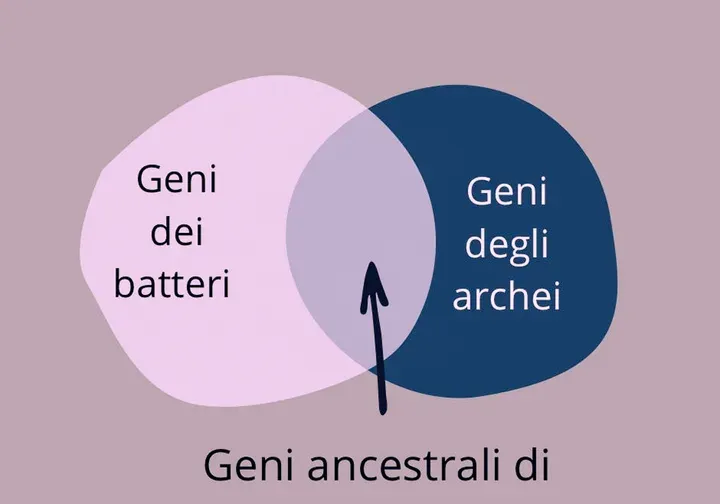
In brief — LUCA was a surprisingly sophisticated organism, with a genome encoding around 2,600 proteins, living some 4.2 billion years ago. Its energy legacy survives in every human cell through the mitochondria. Yet the portrait is still unfinished: the newest reconstructions disagree on whether it already had an ATP synthase, and on how hot its world really was.
Recent discoveries about LUCA (the Last Universal Common Ancestor) are reshaping how we understand the evolution of life — and opening new frontiers in modern medicine. A landmark study published in 2024 in Nature Ecology & Evolution revealed that LUCA was a startlingly complex organism, one that lived roughly 4.2 billion years ago and already carried most of the fundamental cellular machinery that defines life today.
An ancestor more sophisticated than expected
For decades, scientists pictured LUCA as a primitive, simple thing. The most recent research paints an entirely different picture. LUCA had a genome of about 2.5 million bases encoding at least 2,600 proteins — a complexity comparable to that of many modern bacteria. This universal ancestor had already developed sophisticated systems for protein synthesis, DNA replication, energy production, and even a primitive form of immune system.
The study by Moody and colleagues used advanced phylogenetic reconstruction to analyse 700 microbial genomes, showing that LUCA was anything but a simple “progenote”. It possessed a complete metabolic pathway for carbon fixation, ion-transport systems across membranes, and DNA-repair mechanisms that have stayed fundamental in every later form of life.
That reconstruction, published in Nature Ecology & Evolution in 2024 (Moody and colleagues), puts hard numbers on the matter: a genome of at least 2.5 million bases, around 2,600 proteins, an anaerobic acetogen metabolism, and — the detail few expected — an early immune system already at work. And there’s more. LUCA was no hermit. It lived inside an ecosystem: its metabolism left niches for other microbes, and atmospheric recycling of hydrogen sustained a modestly productive community. Life, from its very first breath, has been a collective affair. Exactly like the anaerobic biofilms that colonise periodontal pockets today — communities, not loners.
Here, though, intellectual honesty is in order — something popular science tends to skip. The most recent reconstructions don’t agree at all. A series of 2024 reviews in the Journal of Molecular Evolution — I’m thinking of Patrick Forterre’s — dismantles a few certainties: LUCA may still have had an RNA genome, most likely did not yet possess a complete ATP synthase, and was in all probability a mesophile or moderate thermophile, not the lover of extreme heat we long imagined (it lacks reverse gyrase, an enzyme found only in hyperthermophiles). The portrait of LUCA, in short, is still an unfinished work. Take it for what it is: the best hypothesis available today, not a dogma carved in stone.
The primordial habitat at hydrothermal vents
One of the most fascinating findings concerns LUCA’s habitat. Multiple genomic lines of evidence place LUCA at oceanic hydrothermal vents, environments marked by high temperatures, abundant molecular hydrogen, and rich iron-sulfur compounds. These extreme ecosystems offered ideal conditions for chemosynthesis, letting LUCA produce energy by oxidising hydrogen and fixing carbon dioxide.
In essence, LUCA liked to linger at the spa — much like many of its great-great-great-grandchildren who splash about happily in hot water.
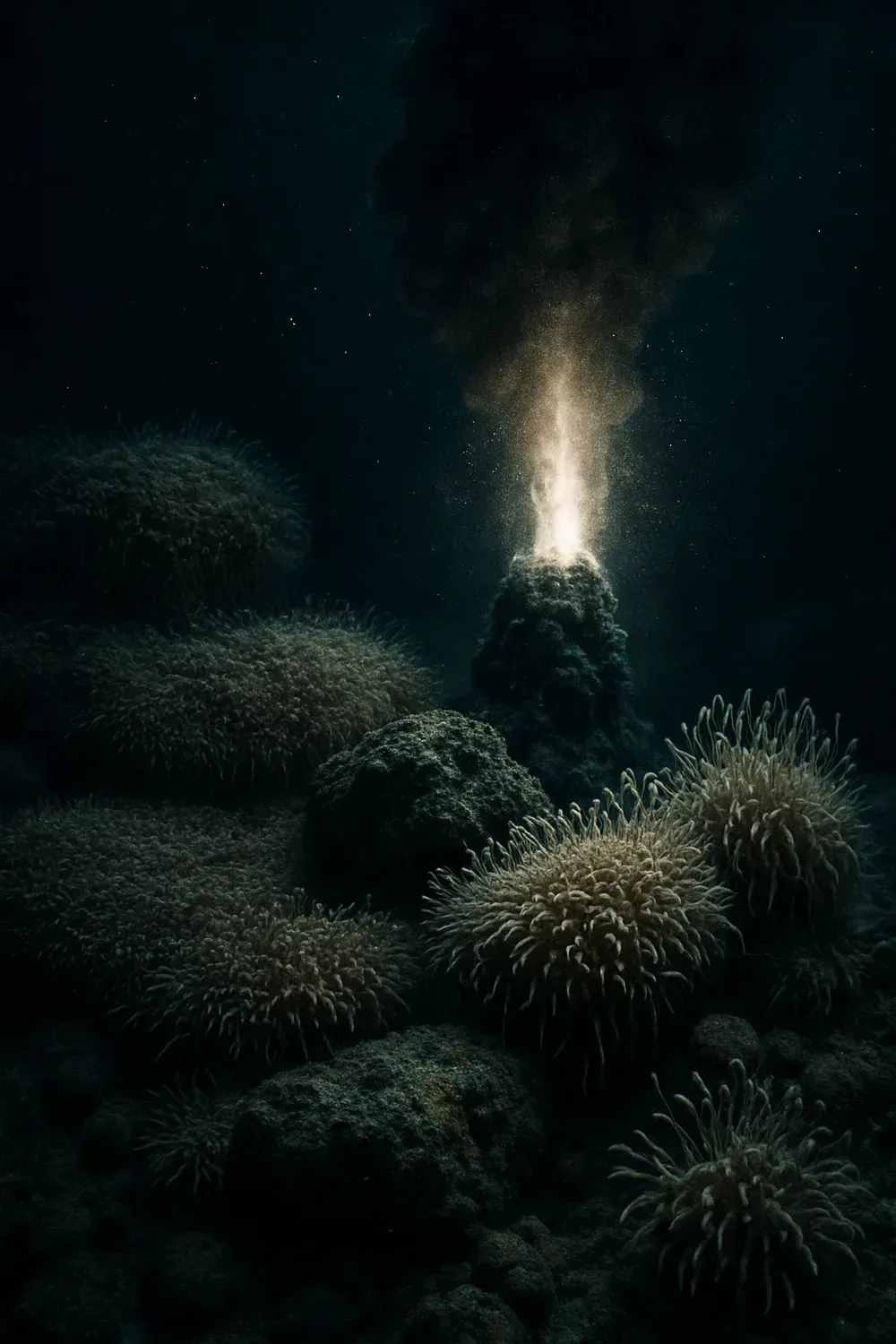
Analysis of LUCA’s genome reveals enzymes specific to hydrogen utilisation and to the synthesis of organic compounds from CO₂ — traits typical of organisms living at hydrothermal vents today. This habitat also explains why LUCA was completely anaerobic, living in an age when oxygen was still absent from Earth’s atmosphere.
Think of the analogy with the classic periodontal pathogens described in aggressive periodontitis, which live without oxygen in the depths of the gingival pockets!
The central role of ATP and proton gradients
A finding particularly relevant to modern medicine concerns LUCA’s energy system. The universal ancestor was already exploiting proton gradients across its membranes — the very principle the ATP synthase works on, even though the appearance of the complete enzyme, as we’ve seen, remains debated. This mechanism, called chemiosmosis, is the foundation of energy production in every modern cell, human cells included.
Initially, LUCA probably exploited natural proton gradients created by the interaction between the alkaline waters of the hydrothermal vents and the more acidic oceans of the time.
Later, evolution refined this system, leading to the impermeable membranes and ion-pump systems that characterise modern cells. This same process underlies how mitochondria work in human cells, making LUCA research directly relevant to understanding metabolic and mitochondrial disorders.
The evolution toward bacteria, archaea and eukaryotes
From LUCA, the three fundamental domains of life evolved: bacteria, archaea and eukaryotes. The main differences between bacteria and archaea developed after the split from LUCA, particularly in the composition of their cell membranes.
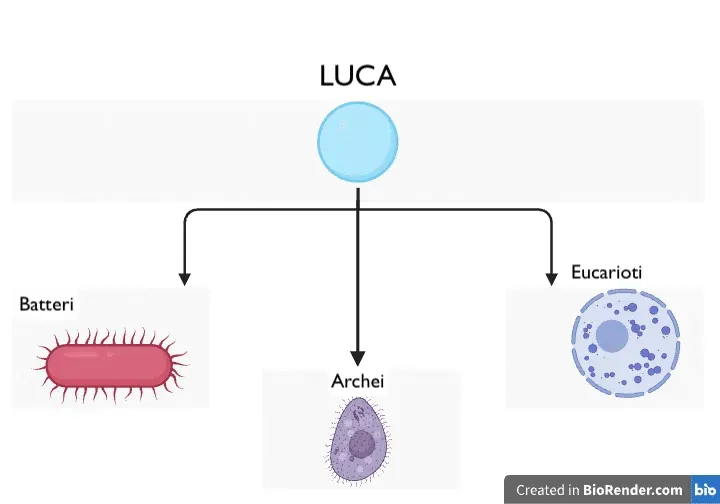
Bacteria evolved membranes containing ester-linked lipids, while archaea developed lipids with ether bonds between glycerol and their hydrophobic side chains.
LUCA probably possessed both types of lipid, with specialisation occurring later.
A point that matters for medicine: eukaryotes — humans included — evolved from archaea through endosymbiosis with bacteria that became mitochondria.
In other words, the primordial bacteria and the eukaryotes learned to live together, the former inside the cytoplasm of the latter. The bacteria, becoming mitochondria, gave the eukaryotes an efficient energy system and, at the same time, found another way to be immortal.
This means that even our own cells contain energy systems descending directly from LUCA, which makes understanding this primordial organism fundamental to modern medicine.
And here the research of the last two years has shifted gear. The major review by Vosseberg and colleagues in Nature (2024) rewrote the script of eukaryogenesis, showing that the complex cell was born from a symbiosis between an archaeal-type host and a proto-mitochondrial bacterial partner. But it’s the work of Tobiasson and Koonin, published in Nature in January 2026, that gives the sharpest version: most of the functional systems of the eukaryotic cell — our cell — come from the Asgard archaea, while the contribution of the alphaproteobacterial endosymbiont was more circumscribed, concentrated on energy-transformation systems and iron-sulfur cluster biogenesis. Translated: the bacterium we swallowed did not “build” us, it powered us.
Clinical relevance and medical applications
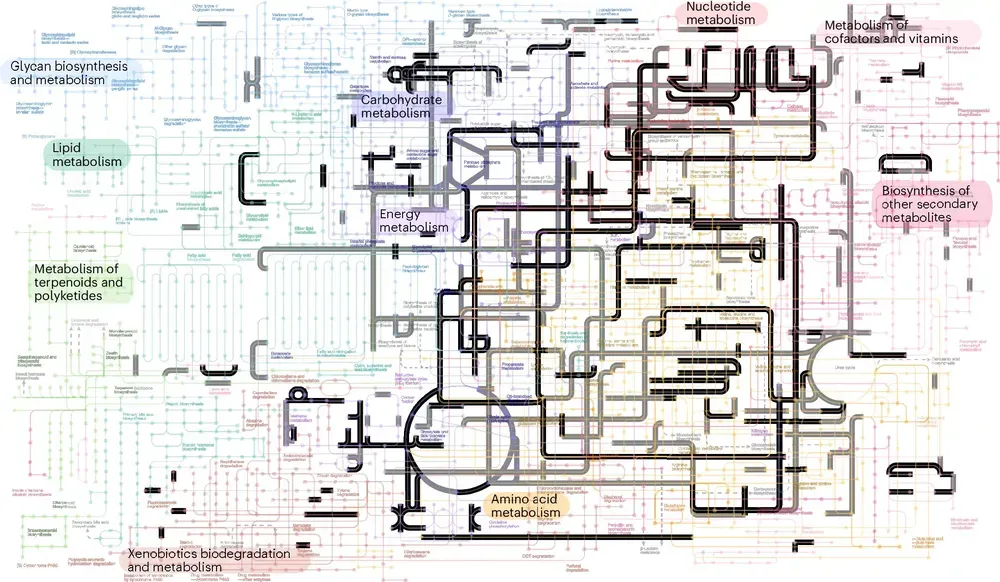
LUCA research has direct implications for contemporary medicine. Identifying the primordial metabolic pathways traced back to LUCA may help explain why certain metabolic disorders strike humans: they are the disruption of ancient, essential systems. Many mitochondrial diseases, for example, involve proteins that descend directly from LUCA’s legacy.
There is one idea, recent and fascinating, that carries this reasoning all the way. Antonio Mazzocca, of the University of Bari, proposed and updated in 2025 in Molecular Medicine the systemic evolutionary theory of the origin of cancer (SETOC): the tumour would arise when the “endosymbiotic contract” between the nucleo-cytoplasmic system (of archaeal origin) and the mitochondrial system (of bacterial origin) breaks down. The transformed cell, disconnected from its energy engine, regresses to the behaviours of a unicellular organism — lactate fermentation, the Warburg effect, a reversed Krebs cycle. I don’t know whether the theory will stand the test of time. But the underlying intuition is elegant: some modern diseases would be the price of an alliance a billion and a half years old that, every so often, cracks.
Biotech companies are already putting this knowledge to work. LUCA Science Inc. is developing mitochondrial-transfer therapies to treat diseases such as Leigh syndrome, while LUCA Biologics uses our understanding of microbial evolution to develop biotherapeutics for urinary-tract infections and other conditions.
Medical education and clinical skills
Despite its growing relevance, only 48% of North American medical-school deans consider evolutionary biology important for physicians. LUCA research offers concrete examples of how evolutionary principles apply to clinical medicine, from interpreting genetic tests to understanding metabolic diseases.
The human microbiome and health
LUCA provides the evolutionary framework for understanding the relationship between humans and their microbial communities. Understanding LUCA’s metabolism helps explain the metabolic interactions within the human gut and oral microbiome, opening new avenues for microbiome-based therapies. This is no abstraction far from the dental chair: the composition of the oral flora influences even systemic metabolism — and the same evolutionary logic explains why a good bacterium can actively protect your teeth, or why a periodontal pathogen can reach as far as the brain.
Future perspectives
LUCA research represents a paradigm shift in medical science. Recent findings suggest the transition from the origin of life to cellular complexity happened in just 200–400 million years, hinting that the evolution of complex biological systems may be faster than expected.
For healthcare professionals, understanding LUCA means acquiring a fundamental evolutionary perspective for interpreting genetic data, understanding metabolic diseases, and developing new therapeutic strategies. Patients can benefit from this understanding through more targeted, personalised treatments grounded in evolutionary principles.
Conclusion
LUCA emerges as an extraordinarily sophisticated organism that laid down the biochemical foundations of modern life. Its legacy is reflected in every cell of our body and in its inner organelles, from the energy-producing mitochondria to the ribosomes that synthesise proteins. For dentists, physicians and healthcare workers, understanding LUCA means gaining a deeper perspective on human biology and its deep origins.
This research, moreover, opens new therapeutic frontiers too, from the development of new antibiotics to mitochondrial therapies — proof that understanding our evolutionary past can guide the medicine of the future.
References
- Moody ERR, Álvarez-Carretero S, Mahendrarajah TA, et al. The nature of the last universal common ancestor and its impact on the early Earth system. Nat Ecol Evol. 2024;8(9):1654-1666. doi:10.1038/s41559-024-02461-1 · PMID: 38997462
- Forterre P. The Last Universal Common Ancestor of Ribosome-Encoding Organisms: Portrait of LUCA. J Mol Evol. 2024;92(5):550-583. doi:10.1007/s00239-024-10186-9 · PMID: 39158619
- Vosseberg J, van Hooff JJE, Köstlbacher S, et al. The emerging view on the origin and early evolution of eukaryotic cells. Nature. 2024;633(8029):295-305. doi:10.1038/s41586-024-07677-6 · PMID: 39261613
- Tobiasson V, Luo J, Wolf YI, Koonin EV. Dominant contribution of Asgard archaea to eukaryogenesis. Nature. 2026;650(8100):141-149. doi:10.1038/s41586-025-09960-6 · PMID: 41535464
- Mazzocca A, Ferraro G, Misciagna G. The systemic evolutionary theory of the origin of cancer (SETOC): an update. Mol Med. 2025;31(1):12. doi:10.1186/s10020-025-01069-w · PMID: 39806272
Sources retrieved from PubMed.
FAQ
What is the new understanding of LUCA in light of recent scientific discoveries?
How does LUCA differ from the traditional idea of a primitive, simple organism?
Which primordial habitat is associated with LUCA, and why is it debated?
Why is LUCA's proton-gradient energy system relevant to modern medicine?
What are the clinical and therapeutic implications of LUCA research?
References
- https://doi.org/10.1038/s41559-024-02461-1
- https://doi.org/10.1007/s00239-024-10186-9
- https://doi.org/10.1038/s41586-024-07677-6
- https://doi.org/10.1038/s41586-025-09960-6
- https://doi.org/10.1186/s10020-025-01069-w
- https://pubmed.ncbi.nlm.nih.gov/38997462/
- https://pubmed.ncbi.nlm.nih.gov/39158619/
- https://pubmed.ncbi.nlm.nih.gov/39261613/
- https://pubmed.ncbi.nlm.nih.gov/41535464/
- https://pubmed.ncbi.nlm.nih.gov/39806272/
Cite this article
Ready for theses, slides and papers. If you cite it on a web page, make the URL a link so readers can reach the source.
Bruschi E. LUCA: the First Living Being — Universal Ancestor of All Life [Internet]. Frosinone (Italy): Bonebenders; 2025 [updated 2026 Jun 12; cited 2026 Sep 20]. Available from: https://bonebenders.com/en/blog/luca-last-universal-common-ancestor/ Bruschi, E. (2025, July 5). LUCA: the First Living Being — Universal Ancestor of All Life. Bonebenders. https://bonebenders.com/en/blog/luca-last-universal-common-ancestor/
@misc{bruschi2025luca,
  author       = {Bruschi, Ernesto},
  title        = {LUCA: the First Living Being — Universal Ancestor of All Life},
  year         = {2025},
  month        = jul,
  howpublished = {Bonebenders},
  url          = {https://bonebenders.com/en/blog/luca-last-universal-common-ancestor/},
  note         = {Accessed 2026-09-20}
} Go deeper
Espansione crestale (split crest) →Allargare la cresta senza trapianto — tecnica ERE e bonebending
Need a professional opinion?
Book an appointment at Dr. Bruschi's practice in Frosinone. First visit includes full diagnosis and personalised treatment plan.
Stai valutando un impianto dentale?
Ho scritto una guida in 8 capitoli che spiega tutto quello che un paziente dovrebbe sapere prima di sedersi in poltrona. Niente marketing — solo fatti, casi studio e una checklist per fare le domande giuste.
Scarica la guidaStay Updated
New articles on periodontology, implantology and oral surgery — delivered to your inbox.
Comments
Loading comments...
Leave a comment